The Price We Pay: Why Prices in Lebanon Go Up, But Rarely Down
With more than a million displaced and food insecurity rising, Lebanon must build the price governance that stops crisis profiteering.

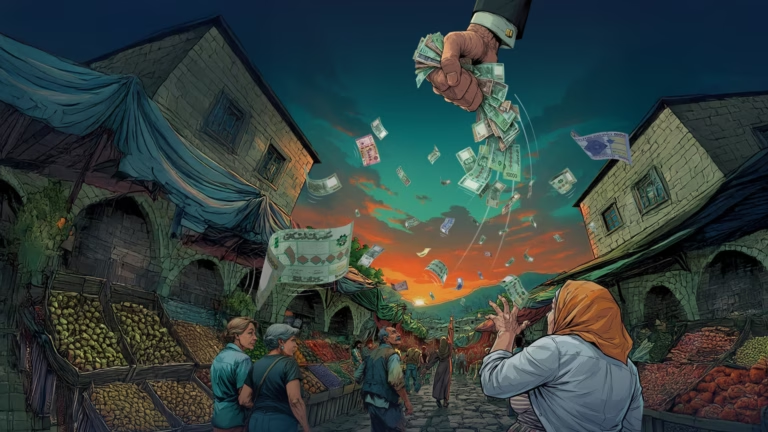
With more than a million displaced and food insecurity rising, Lebanon must build the price governance that stops crisis profiteering.

How Lebanon’s treasury got hooked on tobacco profits at the public’s expense.
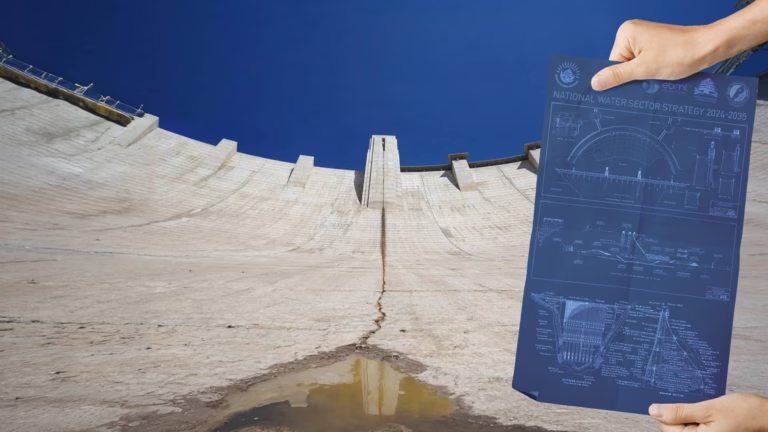
Plans for new dams, canals, and treatment plants will fail without governance reform, pollution control, and demand management
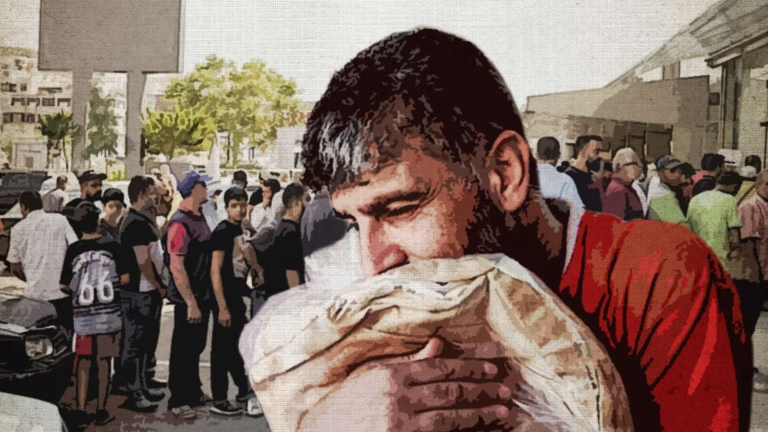
Politicians must uphold the most basic promise of governance – to feed the people.

How the war impacted Lebanon’s food supply chain and how to fix it.

Rapid urbanisation, illegal logging, and wildfires whittling away at country’s wooded areas
The Ukrainian crisis is merely the latest alarming threat to Lebanese food security in recent years. It follows on the heels of the country’s economic crisis, the COVID-19 pandemic, and the Beirut Port explosion – a series of unambiguous warning shots

Recent $150 million World Bank loan another step into the debt abyss without long-term food security strategy

Climate change could ruin Lebanon; adaptation must be central to any recovery plan

Lebanon’s short-sighted economy has chased profits for the few at the expense of the gener- al public, resulting in almost three quarters of wealth being owned by 10 percent of the population