API consists of a global team of journalists, editors, researchers, analysts, designers, communicators and, above all, people who believe in progressive change.


Editorial Staff
Beyond Disarmament: What Lebanon’s Army Really Needs
Without a new deterrence model, Lebanon and its donors won’t get an army that can disarm Hezbollah, preserve stability, and defend its borders

The End of Pretend: Lebanon Will Reconstruct When It Changes Its Taxation System
With foreign aid drying up and the old debt-fueled model exhausted, rebuilding the country depends on whether Lebanon’s elites pay their fair share



Yes or No: Does MTV Practice the Transparency It Preaches?
Who owns MTV, and how is it funded? We expose the TV channel’s hypocrisy in its ongoing smear campaign against independent media in Lebanon.

Israel’s War on Journalism: One Year After Issam Abdallah’s Killing, the Silence Must End
The international community’s indifference to this attack has only emboldens Israel’s campaign on media workers.

Uncovering the Hidden Toll: Gaza’s True Casualty Numbers Exceed Estimates
Israel likely to be responsible for 200,000 fatalities once indirect deaths are counted.

Postal Politics: The Battle for Lebanon’s Postal Contract
How the rivalry for LibanPost could decide the country’s financial future.
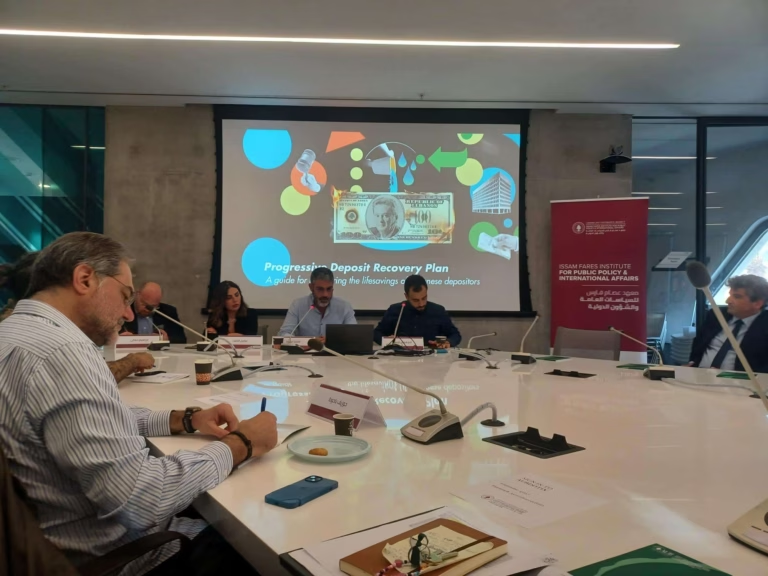
A discussion on “Lebanon’s Last Chance for A Progressive Deposit Recovery Plan”
IFI, in collaboration with Badil – The Alternative, hosted a closed discussion for heads of Lebanese syndicates on April 15, 2024. The discussion was centered around a study by Mohamad Farida titled “Lebanon’s Last Chance for A Progressive Deposit Recovery Plan,” published in December 2023. The plan outlines strategies to address the issue of deposits […]
Briefing: Reform of the Lebanese Armed Forces
CONTEXT The United States is the Lebanese Armed Forces’ (LAF) largest international donor, contributing over US$3 billion in financial aid, as well as most of the army’s weaponry, since 2006. For Washington, such historic support for the LAF is strategically aimed at countering the influence of Hezbollah, a Lebanese political party and militia backed by […]


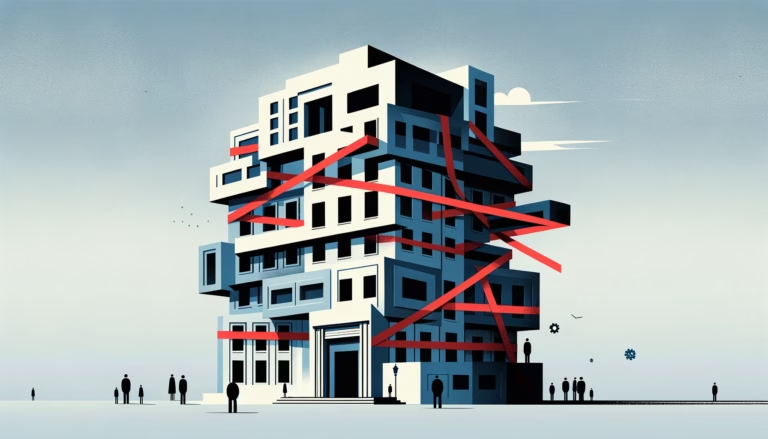
Lebanese State-Owned Enterprises: Navigating Reform and Recovery
A roadmap for state-owned enterprises reform in Lebanon, emphasizing transparency, good governance, and rejecting the controversial ‘Sovereign Fund’ to steer towards economic stability.

Redeeming Lifesavings: The Progressive Deposit Recovery Plan
The Progressive Deposit Recovery Plan offers an opportunity for accountability and the redemption of the Lebanese people’s lifesavings
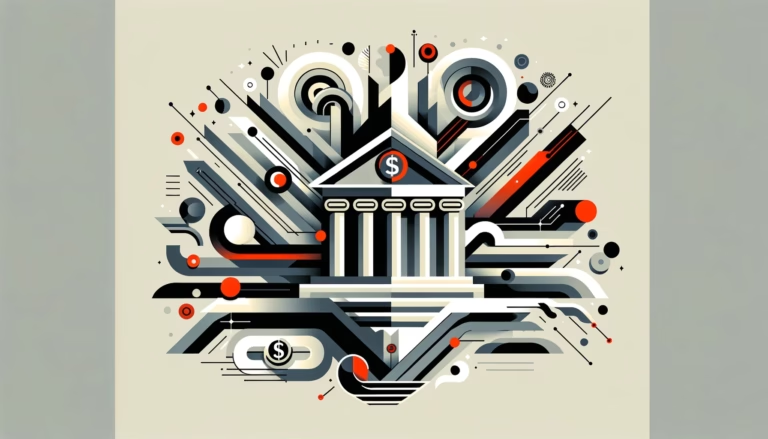
Rescuing What’s Lost: Progressive Deposit Recovery Plan
The Progressive Deposit Recovery Plan offers a lifeline for Lebanese depositors, aiming to recover and restore funds once deemed lost in the country’s financial turmoil

Pity the Nation That Enters Into An Unwinnable War
Lebanon cannot afford a war with no end game, and neither can the world
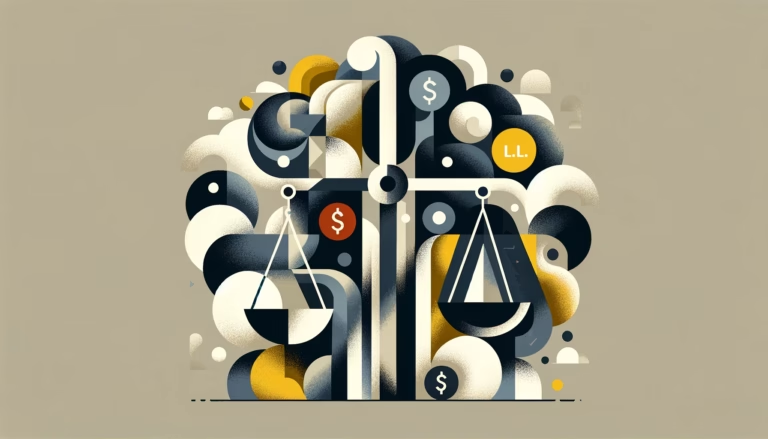
Currency Chaos: Lebanon’s Exchange Rate Policy
Assessing Lebanon’s exchange rate chaos: Sayrafa, monetary governance reforms, and the need for a managed float of the lira.
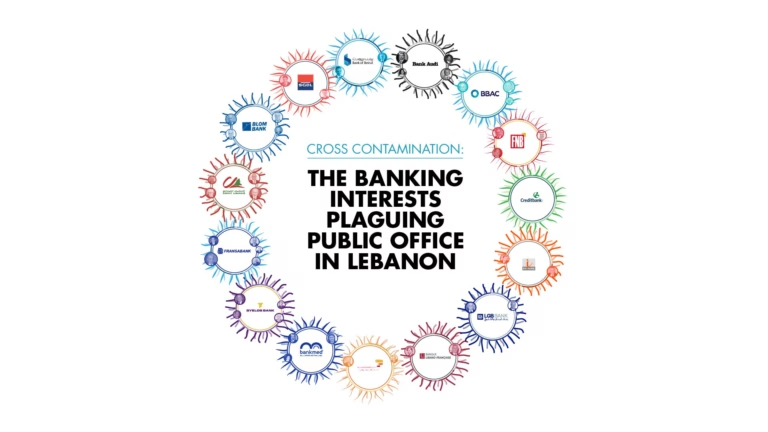
Cross Contamination: The Banking Interests Plaguing Public Office in Lebanon
The Alternative’s investigation of Lebanon’s banking sector reveals conflicts of interest behind the country’s financial and political masters
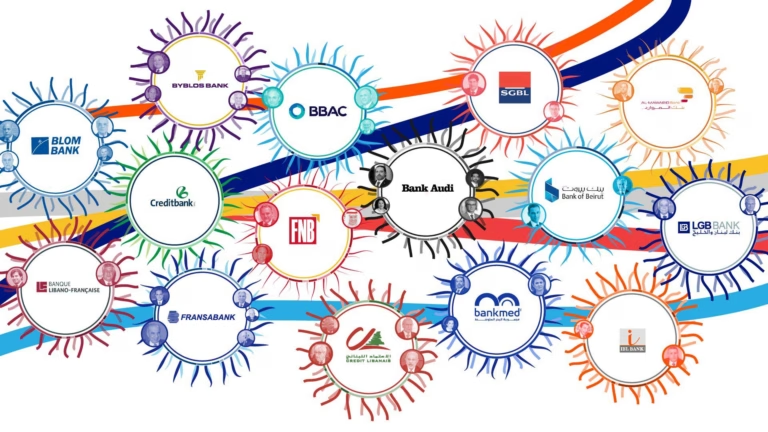
‘They’ Have Names: Who’s Behind Lebanon’s Banks & State
An editorial investigation into how the vested financial interests of Lebanese bankers and politicians are one and the same.
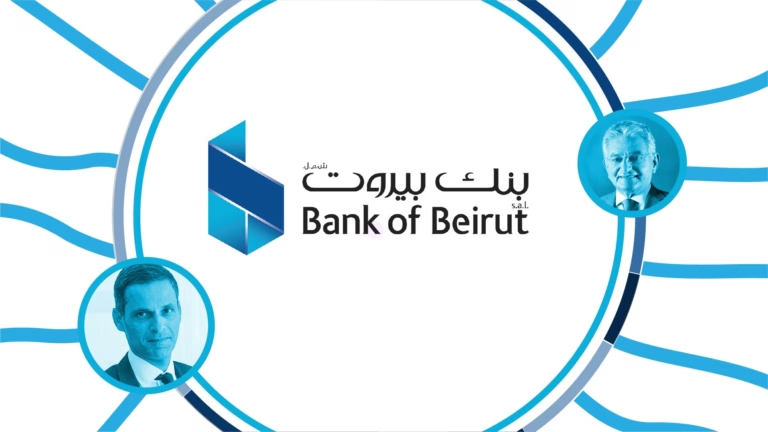
Bank of Beirut
Founded: 1963Total Assets*: US$12.09 billionCustomer Deposits*: US$9.62 billionRanking by Assets*: 7 (*as of Dec 31, 2021, ABL Almanac 2022, converted at LL1507.5/US$) Background Realty Business Bank SAL opened in 1963 and was renamed Bank of Beirut in 1970. In 1992, with just five branches operating in Lebanon, the company was purchased by a group of Lebanese bankers and […]
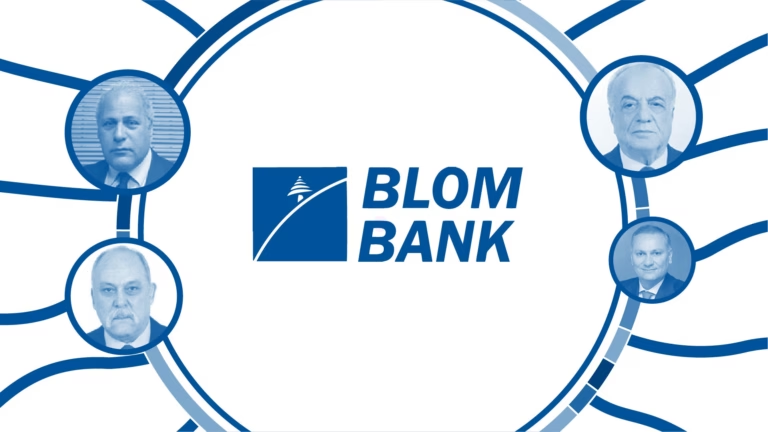
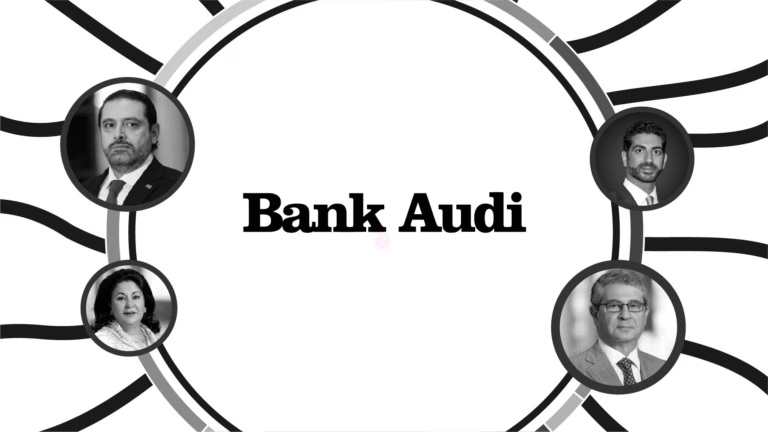
Bank Audi
Founded: 1962Total Assets*: US$27.0 billionCustomer Deposits*: US$20.2 billionRanking by Assets*: 1 (*as of Dec 31, 2021, ABL Almanac 2022 converted at 1507.5 LBP/USD) Background From humble beginnings as an exchange house in Saida established in 1830 that extended credit to farmers,1Hicham Safieddine, Banking on the State: The Financial Foundations of Lebanon, Stanford Studies in Middle Eastern and Islamic Societies and […]
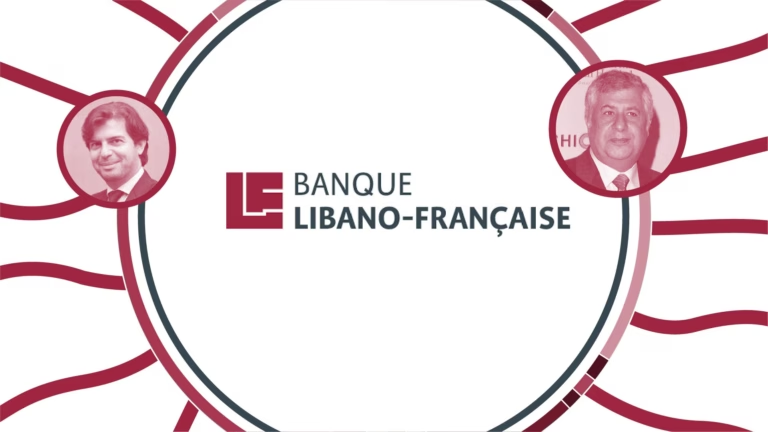
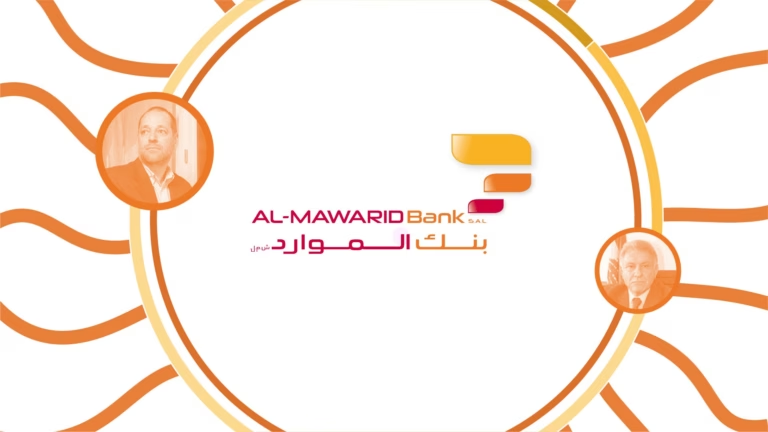
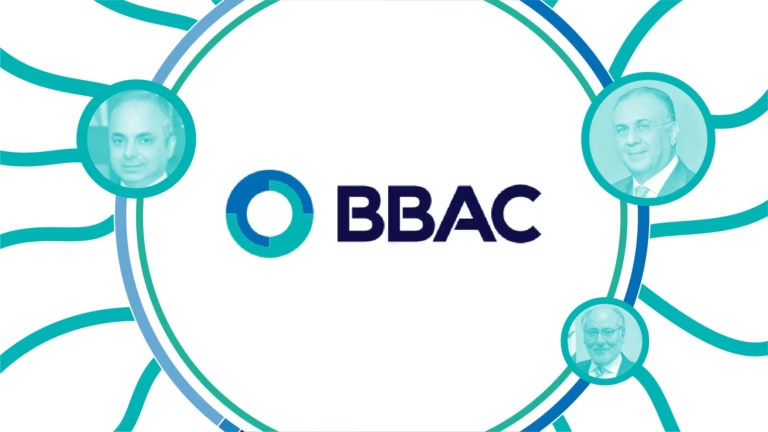
BBAC
Founded: 1956Total Assets*: US$7.21 billionCustomer Deposits*: US$4.97 billionRanking by Assets*: 10 (*as of Dec 31, 2021, ABL Almanac 2022, converted at LL1507.5/US$) History Bank of Beirut and Arab Countries (BBAC) was established by three Lebanese investment magnets – Toufic Assaf, Nashaat Skheikhelard, and Jamal Shehaiber – in 1956. Assaf remained Chairman and General Manager until 1996 when, following his […]
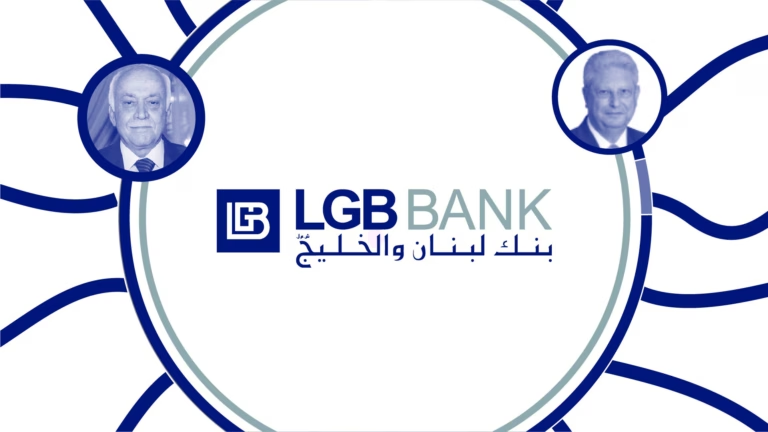
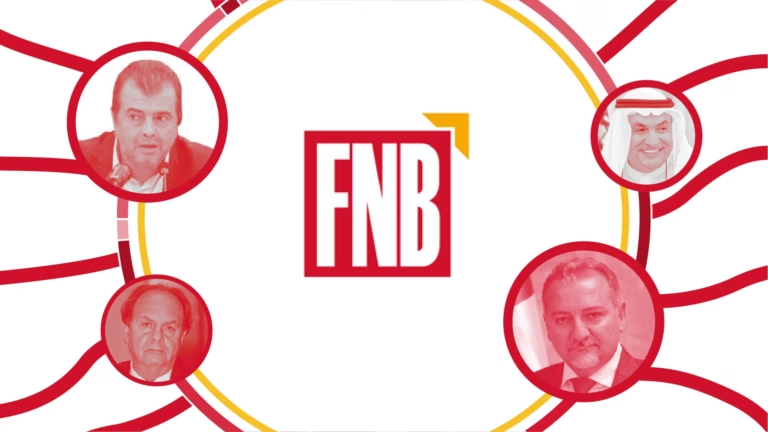
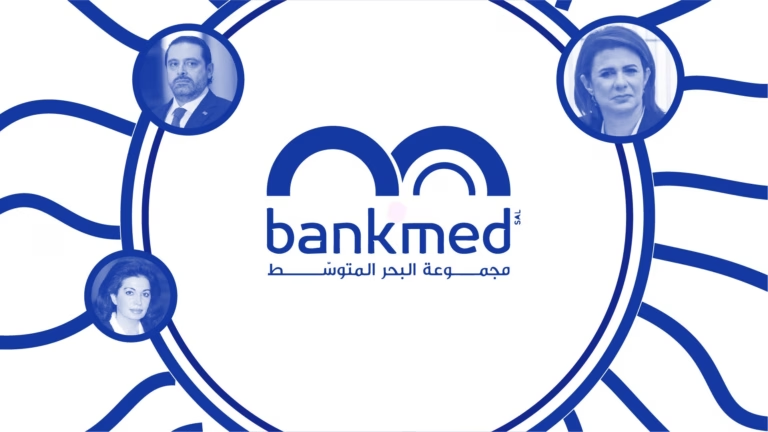
Bankmed
Founded: 1944Total Assets*: US$15.53 billionCustomer Deposits*: US$11.64 billionRanking by Assets*: 5 (*as of Dec 31, 2019, ABL Almanac 2022, converted at LL1507.5/US$) Background BankMed SAL (formerly known as Banque de la Méditerranée SAL) was founded in 1944 in Beirut.1↓Diebold Nixdorf, ‘Bankmed Launches First Deployment Of DN SeriesTM In Lebanon’, accessed 13 March 2023, https://www.prnewswire.co.uk/news-releases/bankmed-launches-first-deployment-of-dn-series-tm-in-lebanon-835063702.html.↓ Today, the bank is closely associated with two-term […]
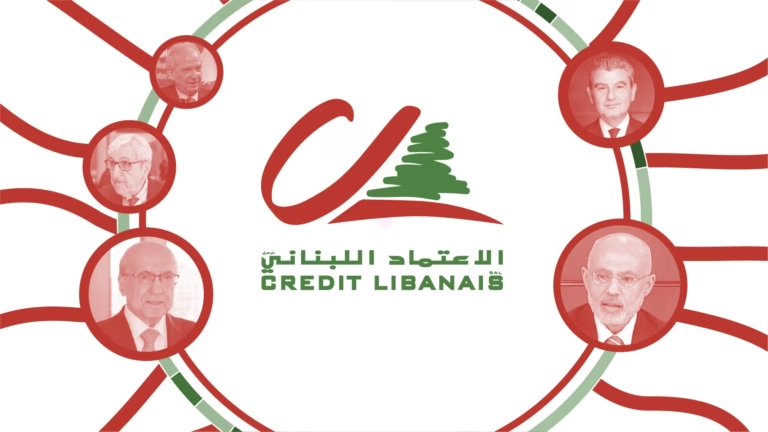
Credit Libanais
Founded: 1961Total Assets*: US$9.09 billionCustomer Deposits*: US$6.78 billionRanking by Assets*: 9 (*as of Dec 31, 2021, ABL Almanac 2022, converted at LL1507.5/US$) Background Credit Libanais was founded in 1961 as a Lebanese joint stock company. The bank’s current Chairman-General Manager, Joseph Torbey, is a veteran of both the Lebanese financial and political scenes. His career in the banking sector includes […]
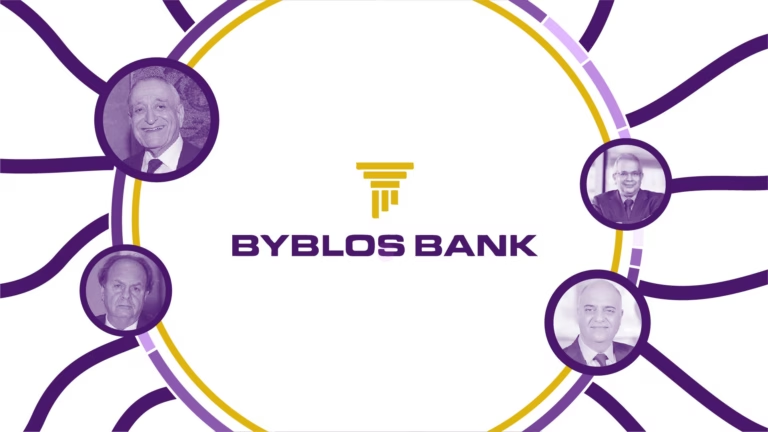
Byblos Bank
Founded: 1950Total Assets*: US$17.24 billionCustomer Deposits*: US$13.2 billionRanking by Assets*: 4 (*as of Dec 31, 2021, ABL Almanac 2022, converted at LL1507.5/US$) History Businessman Semaan Bassil Sr. and his brother Youssef Melkan Bassil established Société Commerciale et Agricole Byblos Bassil Frères & Co. in 1950, renaming it Byblos Bank in 1963 after their city of origin.2‘Banks in Lebanon’, Ostamyy, accessed 01 March 2023, https://web.archive.org/web/20140328064540/http://www.ostamyy.com/banks/Lebanon.htm↓ […]
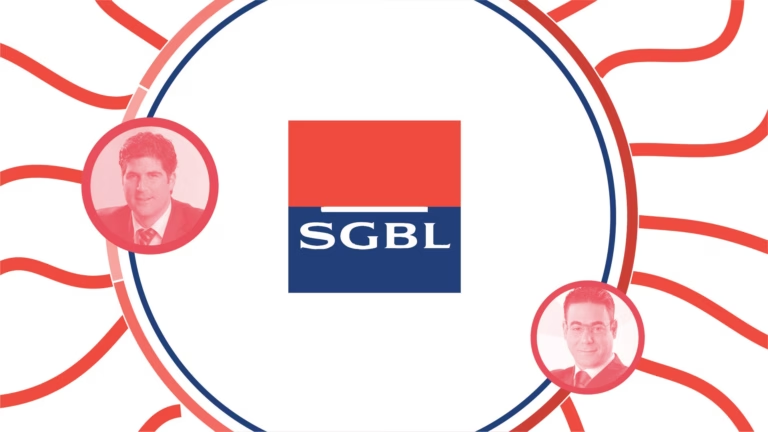
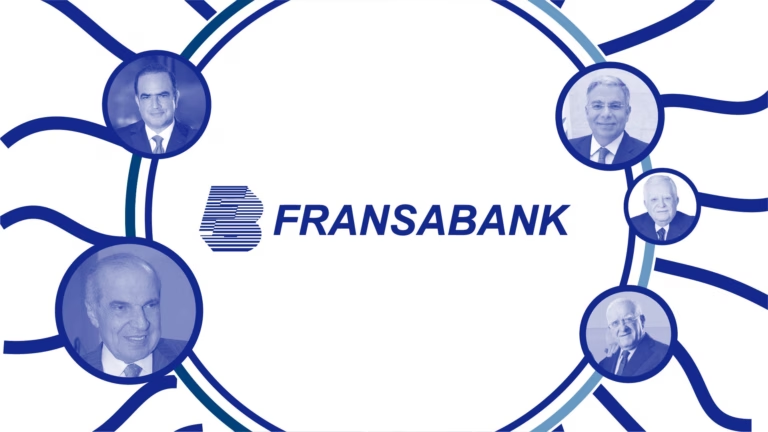
Fransabank
Founded: 1921Total Assets*: US$15.06 billionCustomer Deposits*: US$12.34 billionRanking by Assets*: 6 (*as of Dec 31, 2021, ABL Almanac 2022, converted at LL1507.5/US$) Background First established as a Lebanese branch of Crédit Foncier D’Algérie et de Tunisie (CFAT) in 1921, Fransabank is the oldest registered bank in Lebanon. The bank changed name and ownership multiple times until Adnan and Adel Kassar bought a majority shareholding in […]
Creditbank
Founded: 1981Total Assets*: US$3.68 billionCustomer Deposits*: US$2.97 billionRanking by Assets*: 13 (*as of Dec 31, 2020, Bilanbanques 2021, converted at LL1507.5/US$) Background Creditbank was founded in 1981 under the name Credit Bancaire by Joseph Khalife and Fouad Zoghby. It acquired Credit Lyonnais SAL, the local subsidiary of the French bank Credit Lyonnais, in 2002, and changed its name to Creditbank.3↓Creditbank, […]
Shadow Trade: Smuggling’s Winners, Losers & Enduring Dynamics
Why illegal cross-border commerce is so hard to stop
Lebanon’s 2022 Budget: Harsh Realities of Tax Reform and Government Intentions
Lebanon’s 2022 budget’s has a preference for regressive taxation, potentially shielding the wealthy while financially straining ordinary citizens.

Trick Not Treat: Lebanon’s banking secrecy law is more appearance than substance
Lebanon amends banking secrecy law to appease the IMF but leaves loopholes to protect politico-banking elite

Bank Restructuring in Lebanon: Depositor Protection, Clawbacks, and Legal Loopholes
Addressing Lebanon’s banking turmoil through lirafication debates, accountability for large deposits, clawbacks, bankruptcy laws, and potential conflicts of interest in governance.

Rhetoric or Reform: Lebanon’s 2022 Financial Recovery Plan
Analyzing Lebanon’s 2022 Financial Recovery Plan, from its ambitious promises to critical flaws in depositor compensation, fund structure, wealth legitimacy checks, and the glaring lack of accountability.

Ministry of Finance Budget Circulars November – December 2022
Summary and analysis of circulars and decisions issued by the Ministry of Finance and Banque Du Liban from November to December 2022
Saade Chami’s Financial Reform Plan: Another Tool To Disregard Accountability
The Financial Recovery Plan appears to solve Lebanon’s financial crisis, but a closer look reveals it’s a tool to preserve elite interests at the expense of depositors’ savings.
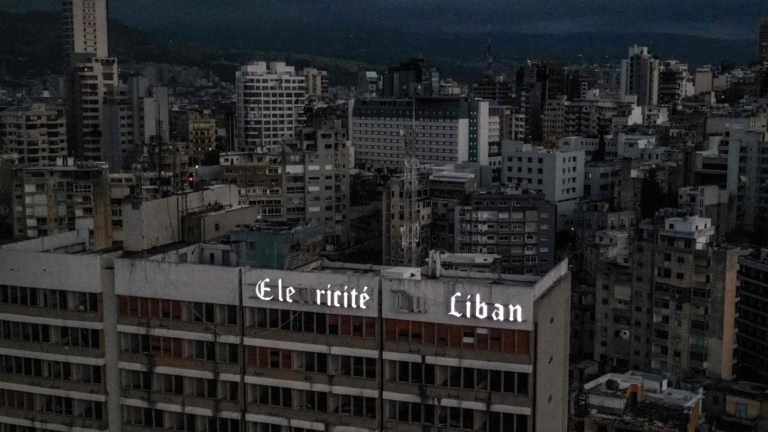
Short Circuits: Why Lebanon’s electricity sector is still broken
Infrastructure, political, and legal barriers to reforming Lebanon’s broken electricity sector
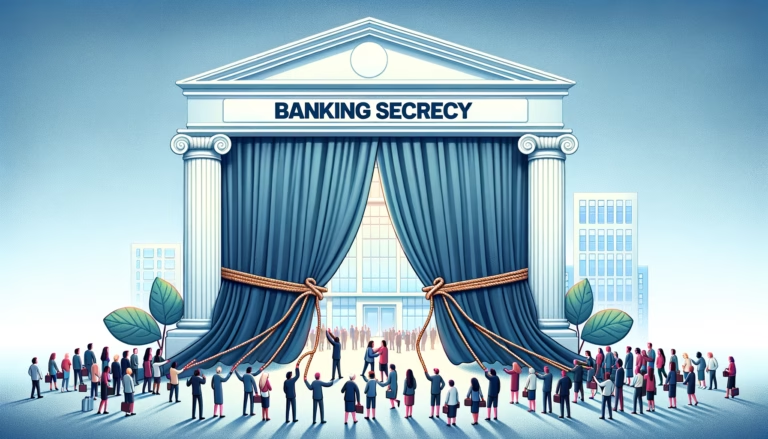
The New Banking Secrecy Law: An Advance But Not A Victory
Lebanon’s updated banking secrecy law is progressing towards reform, yet riddled with ambiguities and potential for power abuse.

The Updated Banking Secrecy Law: A Step Forward with Lingering Loopholes and Challenges
Assessing Lebanon’s revised banking secrecy law and its progress, while pointing to its loopholes, need for independence, and effective enforcement mechanisms.

Unfinished Business: Distributed Renewable Energy in Lebanon
The MOEW’s latest renewable energy draft law faces criticism for consolidating power, with experts pushing for reforms to decentralize the sector and break the EDL monopoly.
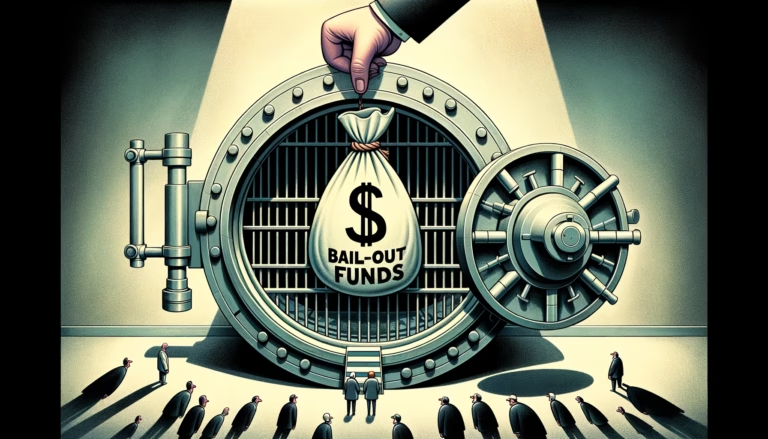
From Bail-out To Bail-in: Distribution Of Losses And Accountability In Lebanon’s Financial Plan
Lebanon must transition from a depositor-funded bail-out to a just bail-in, holding those responsible for the financial crisis accountable and ensuring fair loss distribution through international standards and local laws.
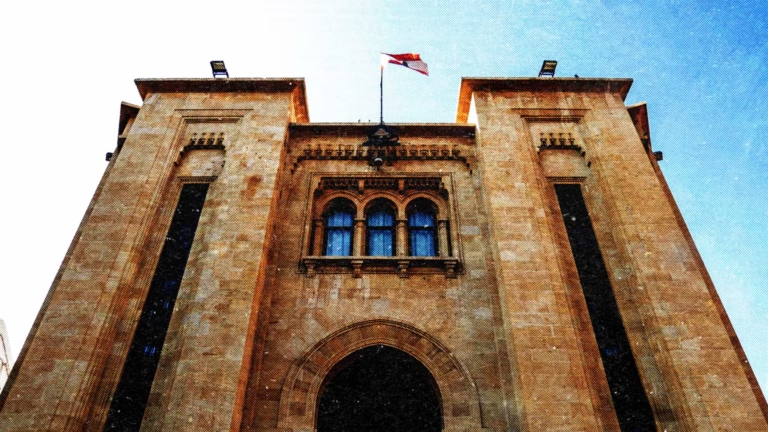
Bogus Budget: Lebanon’s 2022 budget punishes the poor to protect the rich
By kicking the can down the road on comprehensive reform, the 2022 budget is just another power grab by the establishment
Lopsided Fallout: The Crisis of Financial Loss Distribution
Exploring Lebanon’s loss distribution dilemma, focusing on banks using depositor funds to cover losses, evasion of accountability standards, and the urgent need for bank restructuring.

Controlled Chaos: Analyzing Lebanon’s Capital Control Policy
Analyzing Lebanon’s capital control laws, highlighting issues like illegitimate withholding of funds, conflicts of interest in regulatory bodies, depositor discrimination, and the need for stringent, fair amendments.
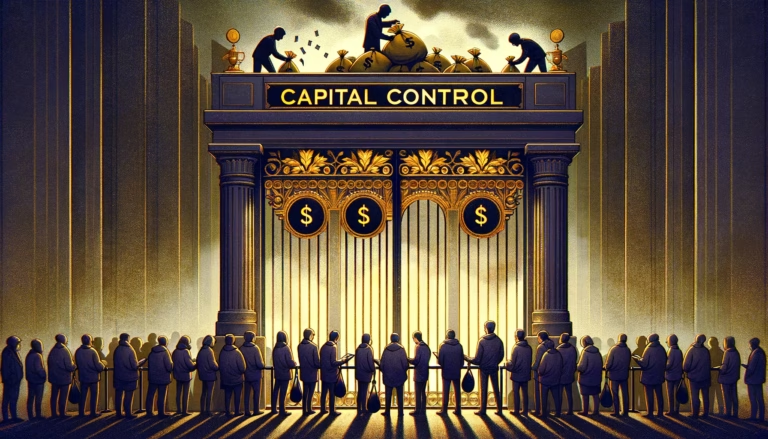
Capital Control: Concealing Corruption
Lebanon’s capital control proposal risks entrenching financial corruption by granting banks undue amnesty and empowering a politically biased committee.

It’s a Trap: Don’t vote blank
How blank votes help the traditional political class win seats

Battle Lines: Ten economic principles for Lebanon’s progressive opposition
Regardless of the election results, the progressive opposition movement needs to follow a clear set of economic principles to take to the people, and the IMF
Vague Intentions: IMF ‘deal’ skirts accountability for Lebanon’s elites
Without details, the IMF’s conditional staff-level agreement does more to entrench political and banking elites than to resolve Lebanon’s financial disaster
Excuses, Excuses: Lebanon’s political class looking for a reason to postpone elections
Elections in Lebanon are currently set for 15 May, but throughout March the ruling political class has alluded to conditions that would buy them time to avoid holding the elections as scheduled.
End Of The Line: Day of reckoning must loom over Lebanon’s elites
As long as the global food and energy crisis continues, Lebanese households – which rely overwhelmingly on imported products – will start skipping meals, eating less, losing nutrients, and falling ill

Broken Bread: Lebanon’s Half-Baked Wheat Subsidy
Recent $150 million World Bank loan another step into the debt abyss without long-term food security strategy

Salvaging Syndicates: How to Defend and Strengthen Lebanon’s Pension Funds
In light of Lebanon’s economic turmoil and pension crisis , how can we safeguard the retirement savings of Lebanese citizens?
A Boycott, Divestment and Sanctions Campaign Against Entities Impeding a Fair Solution to Lebanon’s Financial Crisis
Exploring financial crimes in Lebanon, depositors’ pursuit of justice, the BDS campaign against banking elites, and the challenges of money recovery.

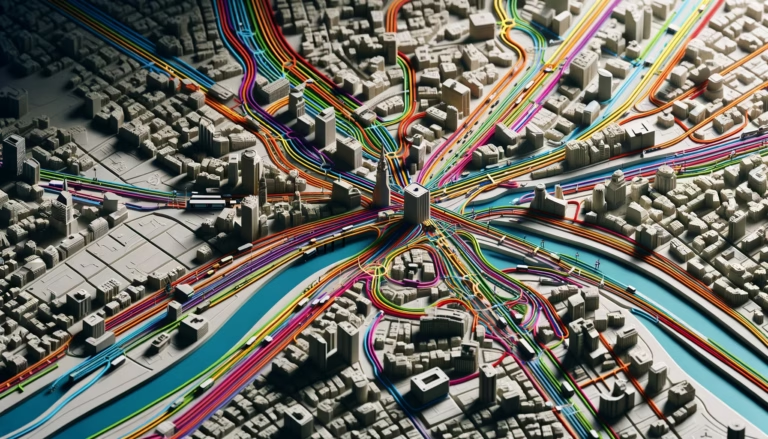
Reviving Lebanon’s Public Transport: Overcoming Political Roadblocks and Crafting Inclusive Solutions for Sustainable Mobility
In the midst of Lebanon’s public transport challenges, we try to envision a diverse and inclusive system that unites citizens and transcends political divisions.

Revitalizing Lebanon: A Progressive Socio-Economic Manifesto for Transformation
Exploring Lebanon’s socioeconomic frailties and policy solutions: Confronting rentier capitalism and crafting a fairer future.

Compromised Judiciary: The Struggle for Justice and Human Rights in Lebanon
Understanding Lebanon’s compromised judiciary, the challenges to judicial independence, and the impact on human rights, using two case studies: freedom from torture and the right to own property.
Bolstering Labour Movements: Lessons from Independent Unions in Lebanon
Navigating the legal restrictions and political co-optation of organized labor in Lebanon.