
Shelf Control: It’s Time for Lebanon to Make Prices Reasonable

War raises prices, traders raise them further, and Lebanon has the tools to stop it.

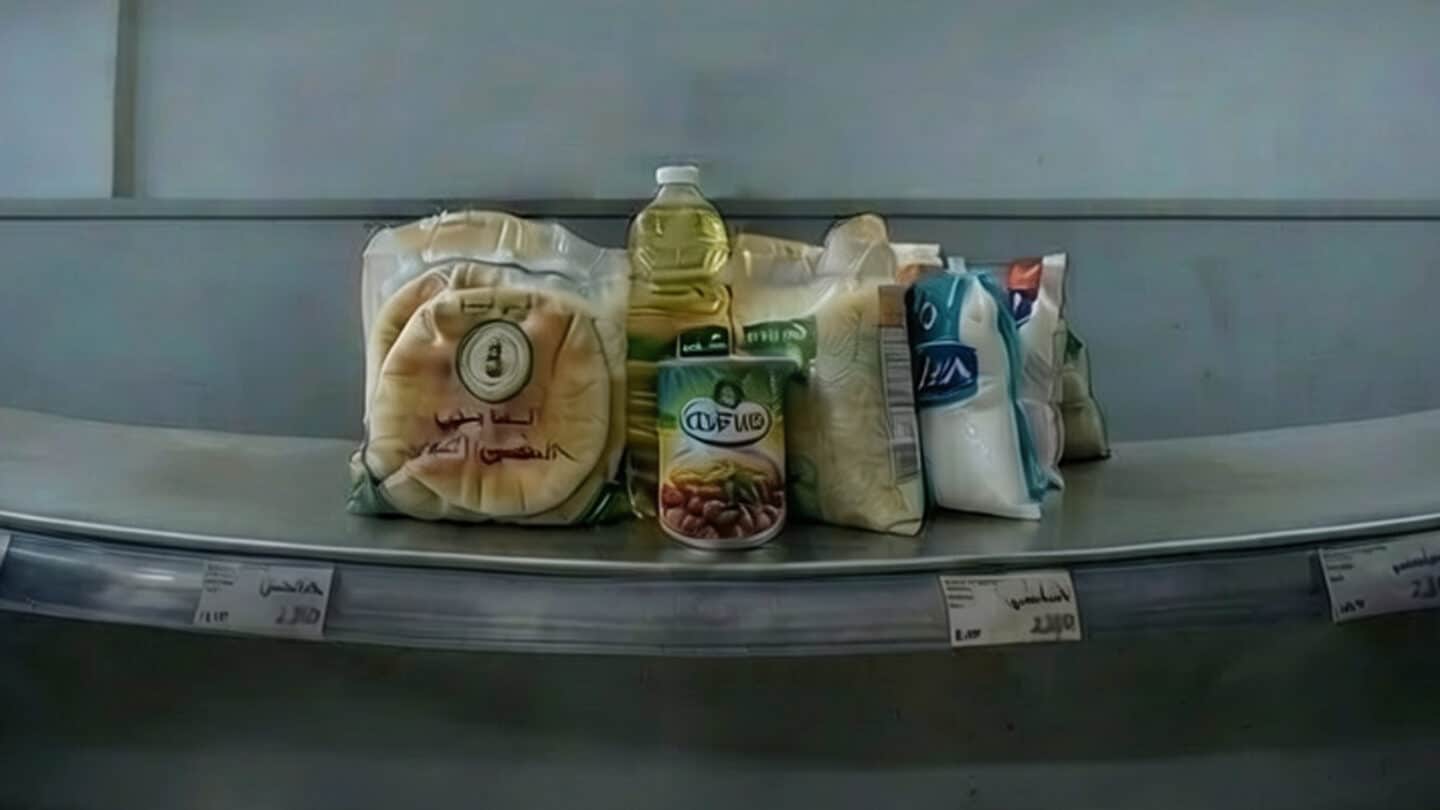
Every few weeks, officials at Lebanon’s Ministry of Economy and Trade tell the public they are doing what they can, that citizens will be protected and families will not be abandoned as the economic shocks of war continue to reverberate. But at the supermarket, there is no relief: families that have already endured the financial collapse, the previous war and mass displacement, and now another war have seen prices for nearly everything shoot up once again. Between February and May 2026, gasoline rose roughly 39%, diesel 62% and private generator tariffs 53%. By May, overall annual inflation was galloping ahead at almost 20%.

Diesel runs the buses, water trucks, generators, refrigerated transport and farm equipment, so when its price climbs it feeds into almost everything else. For poorer households, and for displaced families above all, it cuts deeper into what was already barely affordable.

 

Price Shocks in Concentrated Markets

Some of the pressure comes from outside Lebanon. The US-Israel war on Iran and the latter’s closing of the Strait of Hormuz for most of the past four months have disrupted supply routes, pushed up global fuel prices, and exposed the vulnerability of Lebanon importing most of what it consumes. Farmland destroyed and damaged by Israeli attacks across the South in the war with Hezbollah also contributed to the 45 percent rise in vegetable prices since June 2025

Every few weeks, officials at Lebanon’s Ministry of Economy and Trade tell the public they are doing what they can, that citizens will be protected and families will not be abandoned as the economic shocks of war continue to reverberate. But at the supermarket, there is no relief: families that have already endured the financial collapse, the previous war and mass displacement, and now another war have seen prices for nearly everything shoot up once again. Between February and May 2026, gasoline rose roughly 39%, diesel 62% and private generator tariffs 53%. By May, overall annual inflation was galloping ahead at almost 20%.

Diesel runs the buses, water trucks, generators, refrigerated transport and farm equipment, so when its price climbs it feeds into almost everything else. For poorer households, and for displaced families above all, it cuts deeper into what was already barely affordable.

 

Price Shocks in Concentrated Markets

Some of the pressure comes from outside Lebanon. The US-Israel war on Iran and the latter’s closing of the Strait of Hormuz for most of the past four months have disrupted supply routes, pushed up global fuel prices, and exposed the vulnerability of Lebanon importing most of what it consumes. Farmland destroyed and damaged by Israeli attacks across the South in the war with Hezbollah also contributed to the 45 percent rise in vegetable prices since June 2025

Inspectors visit stores, file reports and refer violations, and since February, the Consumer Protection Directorate has carried out some 5,700 inspections, filed more than 250 violation reports and caught three large meat traders withholding stock and raising prices without justification.

Those shocks have passed through markets largely controlled by a small circle of powerful actors. Essential goods move through importers, shipping agents, port operators, warehouses, distributors and supermarkets, and concentrated ownership across these nodes creates room for abuse. Prices in Lebanon tend to rise swiftly when a shock hits and to fall slowly, partially, or not at all when it eases. Economy and Trade Minister Amer Bisat has said that price increases this year are roughly twice what they should be due to the malevolence of powerful market actors.

The state’s response has been surface-level, focused on the final price tag on store shelves. Inspectors visit stores, file reports and refer violations, and since February, the Consumer Protection Directorate has carried out some 5,700 inspections, filed more than 250 violation reports and caught three large meat traders withholding stock and raising prices without justification. That work is part of the solution, but it essentially addresses only the symptoms of a much deeper structural problem. A shopkeeper or retailer may attempt to exploit panic to pad their margins, but prices are often artificially elevated long before a product reaches the shelf, by whoever imports it, stores it, controls wholesale access, distributes it, and can afford to hold inventory until prices rise. Moreover, suspected violations take an average of four years to pass through the courts, and the fines for such were written into law prior the post-2019 exchange rate collapse, meaning the maximum punishment is a trivial $1,100.


Laws on Paper, Nothing in Reality

The National Competition Authority (NCA) is the government body tasked with investigating and reining in abuses of structural market power. The Competition Law, passed in 2022, gave the NCA the mandate to investigate cartels, abuse of dominance, market sharing and economic concentration; to look beyond individual violations to the way markets are organized; and to assess whether mergers and vertical integration confer too much control over essential sectors on certain groups. The law arms that authority with real tools, including an investigative unit with judicial-police powers, fines of up to 10 percent of a company’s prior-year turnover, and penalties for individuals that reach the full revenue earned from the products in question. However, now, four years after the competition law was passed, the NCA still exists only on paper, and Lebanon has no serious mechanism to review concentrations of market power in the economy.

BADIL has previously reported on how this distorts local markets. For instance, the cement industry has long been split between three firms, Cimenterie Nationale, Holcim and Sibline, shielded by import tariffs reaching 75 percent and a permitting regime that has kept competitors out. The result is that Lebanese consumers have paid roughly three times the international price for cement. In the agricultural industry in Lebanon’s Akkar region, a handful of traders lock potato farmers into a closed loop, buying their crop below market price and, by several accounts, holding back stock to move it.


A working competition authority would inconvenience the people who have done well under the present arrangement and would draw attention to importers, distributors and trading networks that prefer enforcement to stay fixed on smaller, more visible targets.

A deal now reshaping Lebanese trade is also poised to create a level of market concentration as yet unseen in the country. CMA CGM, the transnational shipping giant owned by the French-Lebanese Saadé family, already operated the main container terminals at the ports of Beirut and Tripoli, the gateways through which most of the country’s imports arrive. In April 2026, it inked a deal to buy Fattal, one of the largest regional distributors responsible for carrying much of what reaches Lebanese shelves, from food and medicine to cosmetics. This deal means one group would then control both the import gateway and one of the primary networks moving goods to the shop. This is precisely the type of vertical integration a competition authority exists to examine to ensure it does not result in market abuses and higher prices for Lebanese families.

With four years having passed between the NCA receiving its mandate, the delay in it being form now appears to be a deliberate political choice. A working competition authority would inconvenience the people who have done well under the present arrangement and would draw attention to importers, distributors and trading networks that prefer enforcement to stay fixed on smaller, more visible targets. It would also ask uncomfortable questions about the relationship between market power and political protection.

Lebanon has buried inconvenient regulators for other sectors before: the Electricity Regulatory Authority was required by law in 2002 and stalled for more than two decades; the Telecommunications Regulatory Authority, similarly mandated in 2002, has been only briefly active since; while the National Anti-Corruption Commission, legally created in 2022, has been denied the resources to function. The competition authority is being pushed toward the same fate.


When Assistance Is Eaten by Prices

Between February and May, the government raised average AMAN transfers, the main public programme to support low-income Lebanese, to a maximum of $145 dollars per household, amounting to a $20.5 increase. Headline prices rose 8.6 percent over the same months, erasing close to $12.5 of that purchasing power, so more than half the gain was gone before households could feel it. A cash transfer that loses value every month, a consumer protection regime that takes years to punish a violation, and a competition law with no competition authority behind it are a woeful state response to the affordability crisis facing the country. A state cannot hand people cash with one hand while allowing ungoverned markets to take it back with the other.

Lebanon’s leaders speak of sovereignty in terms of borders, weapons and foreign pressure. Sovereignty also means being able to regulate ports, warehouses, fuel networks, supermarkets and distribution contracts, and a state that cannot rein in the supply chain abuses robbing normal citizens of their purchasing power has little claim to being their protector. If the Council of Ministers wants to show that protection means more than speeches, the first step is unglamorous and entirely within its power: appoint the National Competition Authority, fund it, staff it, and let it publish merger-review rules, map market concentration across essential sectors, scrutinize major acquisitions, and make crisis pricing and enforcement outcomes public.

None of this would end the war or reverse the economic collapse, but it would help prevent the profiteers of misery from making the Lebanese suffer more than they have to. The first step towards a remedy is clear and readily available; the fact that its implementation remains delayed is indefensible.

Related