Beyond Disarmament: What Lebanon’s Army Really Needs

Without a new deterrence model, Lebanon and its donors won’t get an army that can disarm Hezbollah, preserve stability, and defend its borders.

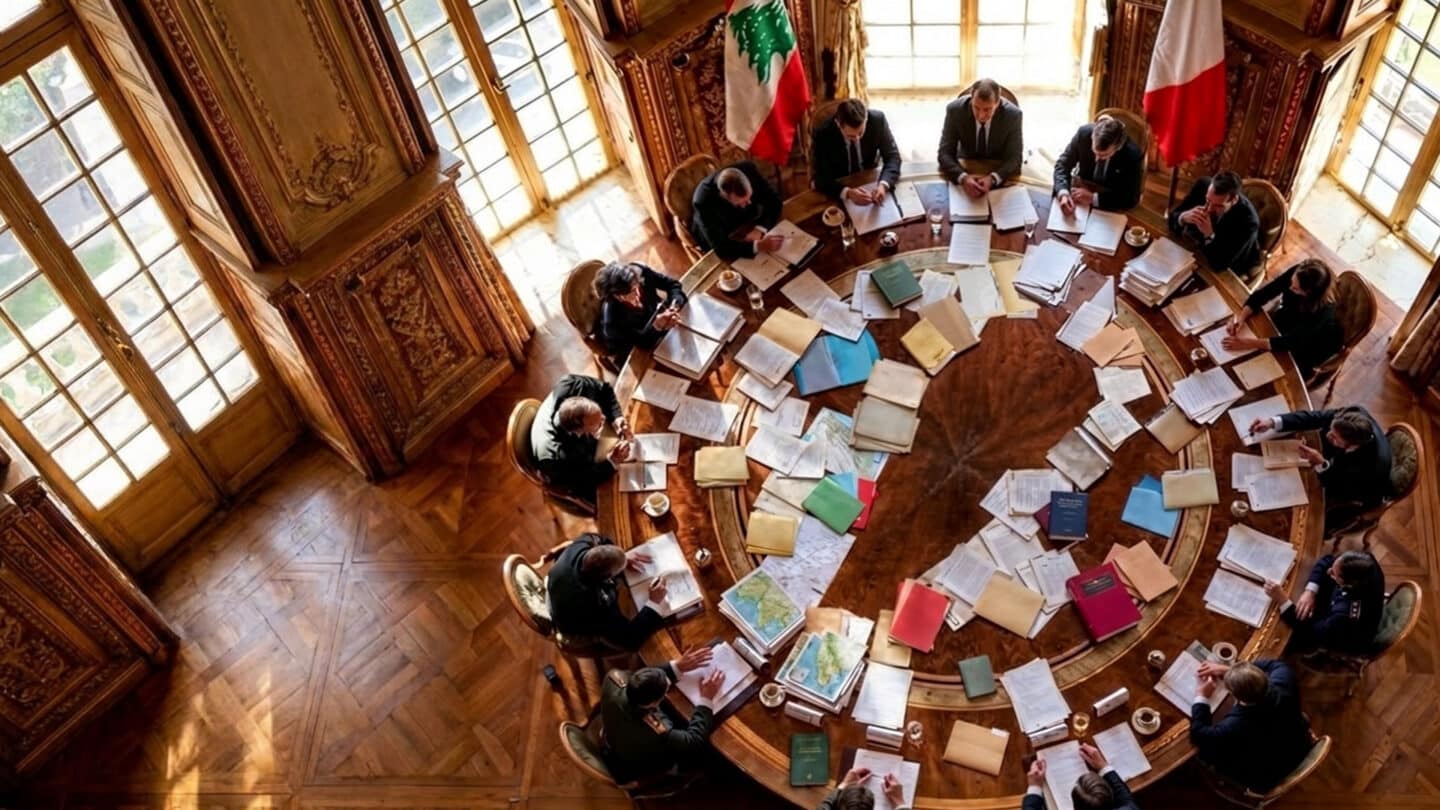
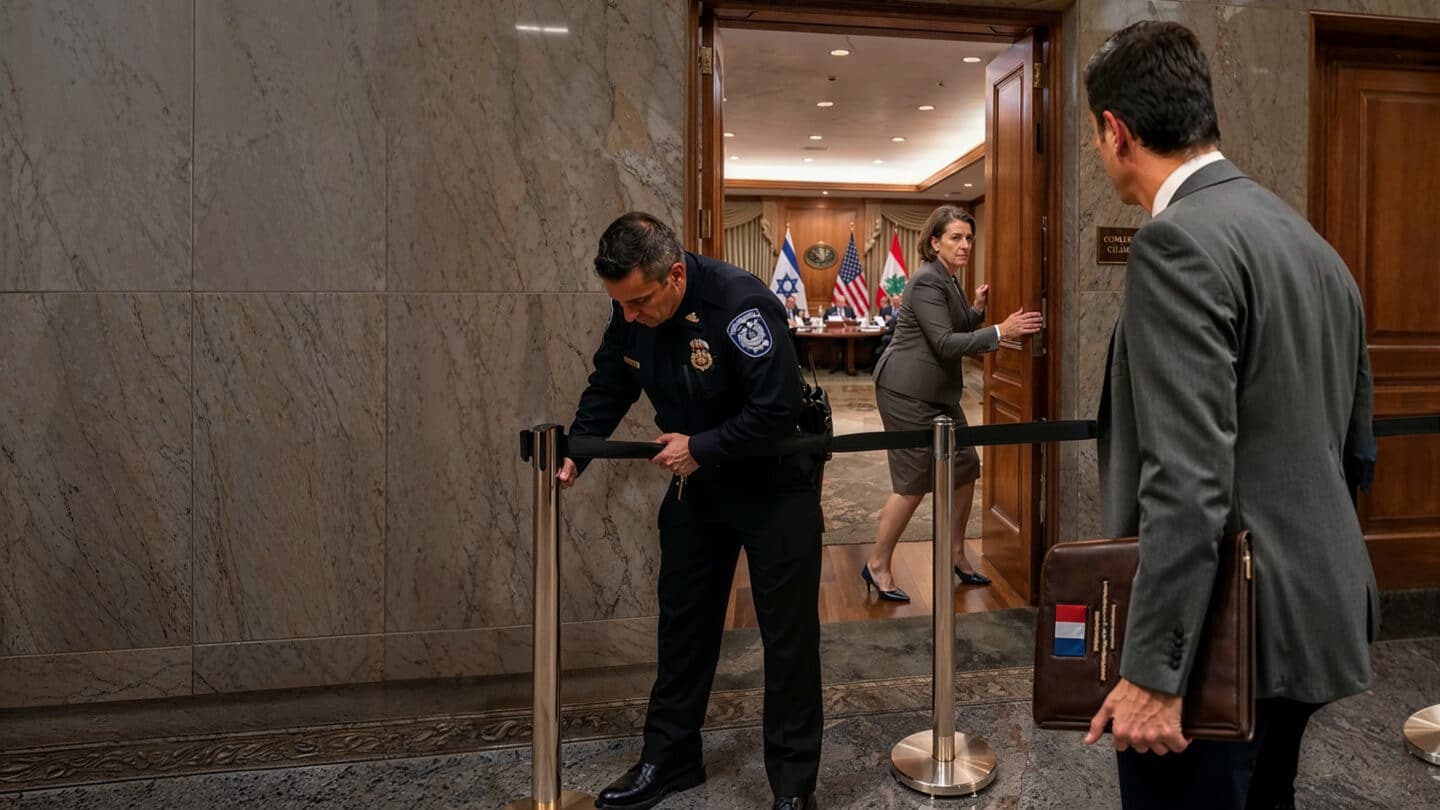
This Thursday, the Lebanese government and its military will travel to Paris to meet with representatives from France and Jordan, with the United States and Saudi Arabia also likely to attend, as part of a new initiative in the Aqaba Process, a military and security cooperation initiative launched by Jordan over a decade ago. The gathering is a preparatory step toward a long delayed wider international conference on securing international support for the Lebanese Armed Forces (LAF).

This meeting comes at a crucial moment for the LAF and Lebanon more broadly. The Lebanese government faces mounting pressure to disarm Hezbollah. Meanwhile, Israel continues to expand its operations in the South of the country, with the LAF taking heavy casualties despite not being a belligerent in the conflict. UNIFIL’s planned withdrawal from southern Lebanon this December, after nearly five decades of deployment, will also remove an important monitoring and liaison presence from the south. Lebanon’s UN ambassador, Ahmad Arafa, has accordingly warned the move is “premature”.

“Strengthening the army is [therefore] crucial,” said French envoy Jean-Yves Le Drian in announcing the meeting earlier this month. “You cannot ask the army to ensure Hezbollah gives up its weapons if it lacks the means to command respect.”

What is missing from the conversation is the other half of the equation: the need for the LAF to be able to deter foreign attacks and defend its borders.

However, such declarations reveal a lopsided mandate. The need to end Lebanon’s military dualism, to disarm Hezbollah, and have the state secure a monopoly on violence within the country, is already well on the agenda at the Paris meeting.

What is missing from the conversation is the other half of the equation: the need for the LAF to be able to deter foreign attacks and defend its borders. This is grounded in both international and domestic law: UN Security Council Resolution 1701 (2006) calls for “the extension of the control of the Government of Lebanon over all Lebanese territory”. This echoes Lebanon’s own Taif Accord (1989), which calls for the same “gradual extension of the sovereignty of the Lebanese government over all Lebanese lands.

Meanwhile, the ability to deter is not only crucial for building the credibility of the Lebanese state, but for also for managing relations between Lebanon and Israel, by increasing the costs of attack on either side and making restraint the preferred choice.

The task for the Lebanese government and its international partners is therefore to build a reformed LAF that is capable not only of maintaining internal security, but also of providing a credible model of denial and resilience that can stabilise the country’s borders, protect its citizens, and help contribute to wider regional stability. Short of that, another conference aimed solely at raising salaries or hiring more soldiers will inevitably result in an all too familiar cycle: an army that is top heavy, relying on foot soldiers to do most of the work, an increasing personnel bill, and lack of equipment and political will to end military dualism.

The aim of deterrence is not to invite conflict but exactly the opposite: by raising the cost of aggression on both sides of the border, deterrence is what makes restraint the rational choice, and stability more durable than the current status quo.
The Need for Deterrence

Deterrence can be defined as the capacity to make an attack cost an attacker more than it is willing to pay. The aim of deterrence is not to invite conflict but exactly the opposite: by raising the cost of aggression on both sides of the border, deterrence is what makes restraint the rational choice, and stability more durable than the current status quo.

Switzerland, often invoked as a model of neutrality, illustrates exactly this point. Its history of neutrality was never passive but rested on a policy of conscription, territorial defence, and a strategy designed to make invasion prohibitively costly.

In the context of Lebanon, deterrence should not be sought through parity but rather through denial and resilience, whereby the LAF should seek to increase the costs of external attacks, thereby making acts of aggression a less attractive choice. Denial means making territorial incursions, raids or prolonged deployments harder to execute and sustain. Resilience means ensuring that the army and the state can continue functioning after an initial attack.

For a resource-constrained LAF, these two concepts could take several forms, such increased surveillance and intelligence, drones and counter-drone systems, secure and redundant communications, and better protection of command infrastructure and military assets. Resilience would also require the capacity to protect critical civilian infrastructure, restore access to affected areas and keep essential state and military functions operating after an attack. Some of these capabilities would complicate incursions; others would ensure that the state remained functional under pressure.

None of these options would eliminate Lebanon’s military asymmetry. Indeed, against an air campaign, Lebanon’s protection will remain largely legal and political for some time yet. Taken together, however, a purposeful approach to denial and resilience would make coercion more difficult, reduce the vulnerability of Lebanese territory and institutions, and raise the costs of limited incursions or repeated attacks.

Building a credible deterrence doctrine will also require a re-imagination of what international support can provide the LAF. Washington has for two decades provided more financial and military support to the LAF than any other country. The nature of that support has been hamstrung by US law, which mandates that it uphold Israel’s qualitative military edge over its neighbours.

While parity must therefore be acknowledged as undesirable among some of the LAF’s key backers, it should also be warned that a complete neutering of the LAF creates exactly the conditions for Hezbollah to assert the indispensability of its own, independent forces. Meanwhile, international stakeholders should recognise that regional stability and Israeli military hegemony are not synonymous, particularly in Israel’s current political reality.


Thinking Creatively Needs to Go Both Ways

For the LAF to be capable of both offering credible deterrence externally and disarming Hezbollah, a radical rethink of the institution is also required. The Lebanese government needs to offer its international partners more than a call for additional funding to support existing LAF structures.

The need for LAF reform needs be understood in the context of the wider role it plays in Lebanese society. With over 80,000 personnel, as many as 400 general-grade officers, the army is the country’s largest public employer and provides healthcare, education, pensions and other benefits to serving personnel, retirees and their families. In poorer regions especially, where formal employment is scarce and social protection weak, the army has often functioned as an economic lifeline.

This social role, however, comes at a cost. In 2025, the Ministry of Defence spent around USD 1.09Bn on the army, of which 76 percent went to personnel costs.  By contrast, capital expenditure amounted to less than 2 percent of total spending, and just 0.4 percent of this expenditure went to the provision of equipment. For a fiscally constrained state, maintaining a large payroll comes directly at the expense of being able to invest in the capabilities that deterrence requires.

Reform will therefore require a gradual rationalisation of the force itself, with difficult choices on how to prioritise expenditure to meet strategic needs. But avoiding reform carries its own strategic cost. If the LAF is expected to become Lebanon’s sole legitimate armed force, its limited resources need to follow its military purpose over employment and welfare. This will require re-defining the priorities for the institutions at the top political level.

Lebanon has been able to reform public institutions before. Middle East Airlines survived the civil war only to face a crisis of its own: by 1997, annual losses had reached $87 million and the carrier was overstaffed and flying an ageing fleet. Rather than simply keeping it, afloat, new leadership drove a five-year restructuring that turned the carrier into a once more profitable enterprise. The national carrier is far from perfect, but MEA has remained one of Lebanon’s few consistently functional state-linked institutions that turns a profit almost every year. Alongside disarmament and deterrence, this same ambition should also apply to one of Lebanon’s most critical and valued institutions: its armed forces.

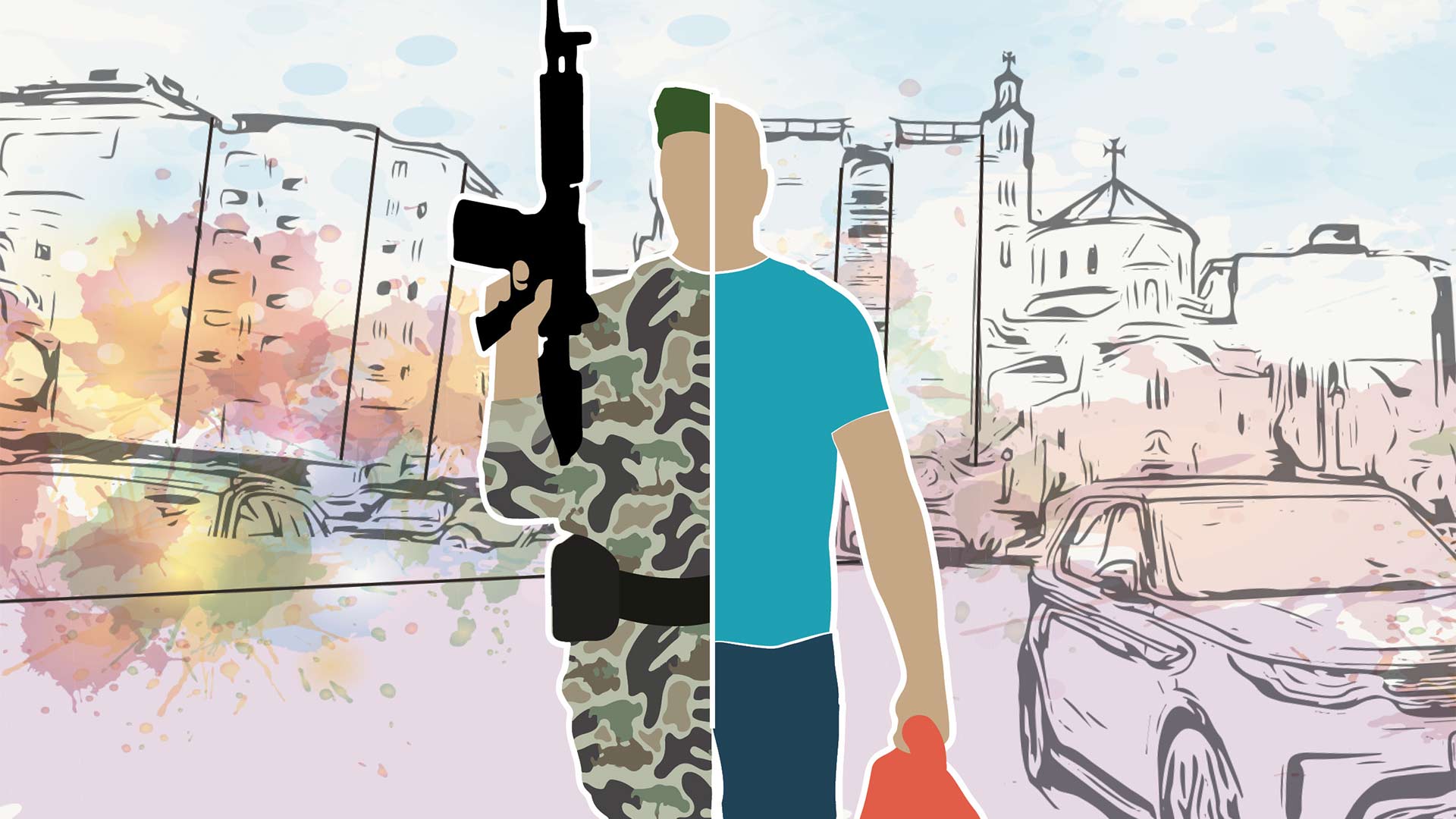
Without an alternative vision for the LAF’s role within its own country, Hezbollah's military forces will almost certainly persist, sustained by a perception of their irreplaceability among large segments of the population.
The Price of Standing Aside

The current position the LAF has been placed in is not sustainable. Despite not being a party to either round of conflict between Israel and Hezbollah since 2023, the ongoing conflict has taken a heavy toll on the force.  Israeli strikes have killed some 70 LAF servicemen and 18 personnel from other state security bodies [2023-24 and 2026 casualties]. Bassel Doueik, who tracks Lebanon for the Armed Conflict Location and Event Data Project, wrote in June that setbacks like these lend credibility to Hezbollah’s argument that military force, not diplomacy or institutions, is what deters Israel.

Without an alternative vision for the LAF’s role within its own country, Hezbollah’s military forces will almost certainly persist, sustained by a perception of their irreplaceability among large segments of the population. In turn, the conflict with Israel will endure, and the disarmament the Paris conference exists to advance will stay out of reach. Lebanon’s partners would therefore be funding an army for a mission their own approach has made impossible.

Success in Paris should not be measured by how much money is eventually pledged or how many soldiers the LAF can field. It should be whether Lebanon and its partners begin building an institution that is financially sustainable and militarily capable, over time, of making exclusive state authority over arms strategically credible. External observers cannot claim to support Lebanon’s sovereignty over Hezbollah’s influence, then support an expansion of personnel numbers but not the means to build a credible deterrence posture. Unless Lebanon develops, and its partners support, a deterrence model that allows the LAF to actually exercise authority over all its territory, sovereignty will remain an empty slogan whether invoked in Beirut, Paris or Washington.


EDITOR’S NOTE: BADIL would like to express its heartfelt gratitude to Victor Masson for his background research and contributions to this editorial.

Related