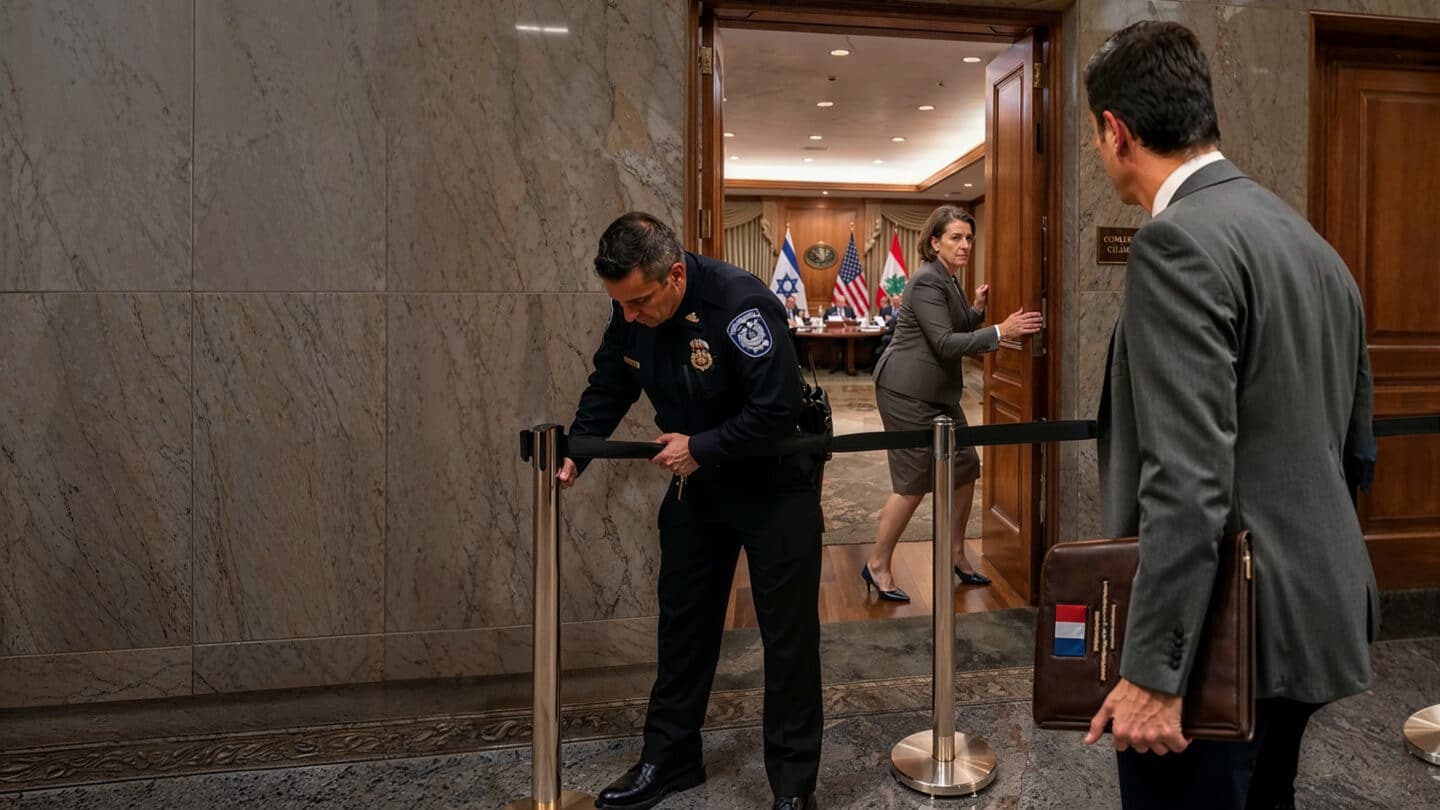
Glass Decades: The Sunset of Gulf Exceptionalism

The Iran war has forced a reckoning for the GCC’s 35-year project to build security and splendor.

It all began with a nightmare: On August 2, 1990, Iraqi forces overran Kuwait in a matter of hours, and during the subsequent seven-month occupation engaged in a torrent of looting, torture, and human rights abuses. It shook the whole Gulf, as these small, wealthy states at the edge of the Middle East became terrifyingly aware that they could be next.  

Following the 1991 US-led Operation Desert Storm to liberate Kuwait, the years that followed saw a gradual project, part-deliberate and part-emergent, to mask that exposure. Facilitating this process was the American military build-out across the Gulf Cooperation Council (GCC) – including Saudi Arabia, the United Arab Emirates, Qatar, Bahrain, Kuwait and Oman – along with Gulf rulers’ decision to host that build-out. That in addition to the financial flows that linked Gulf surpluses to American banks and arms manufacturers, alongside the marketing of the Gulf as a place where the region’s problems did not reach. By the 2010s the project had succeeded so completely that the risk, violence, and upheaval with which much of the world conceives of the region had, for the GCC, slipped over a distant horizon, the invasion of Kuwait treated as a blip in history. Dubai was a global haven. Doha hosted the World Cup. Riyadh sold itself to the world with Vision 2030. The dream was real, and it was working. 

That experiment in exceptionality is now ending. The Israeli air strike on Qatar in September 2025 broke an assumption that Gulf royalty had quietly held since the architecture’s beginning: that the American security guarantee extended to shielding them from Israeli action. The hollow protection Washington offered was then fully apparent to everyone following the US and Israel launching war on Iran in February this year. The first weeks of Iran’s retaliation campaign saw 83 percent of its missile and drones fired at GCC territory rather than at Israel. The American architecture built after 1991 to convert the region’s fragility into managed risk was struck end-to-end, with 16 US bases struck to date, causing an estimated $12 billion in damages. Beyond the bases, Iran hit residential towers in Manama, the Ras Laffan LNG complex in Qatar, the UAE’s Fujairah oil terminal and Dubai International Airport, and the list goes on. The physical damage of these strikes can be repaired, but what may be beyond recovery is the proposition the GCC has been selling for more than a generation. 

The shape of each Gulf center’s re-appraisement is a function of both their particular geography and the developmental path each took during the long peace. The dream was not built the same way in each place, and neither now is the reckoning.

The proposition was always more conditional than its marketing allowed. The Gulf rulers themselves, even as they cultivated the public image of permanent untouchability, kept some of the highest military expenditures in the world, with most of those purchases cycling back into the inventories of American defence contractors. The image global capital bought into was largely true to the underlying opportunity – there was indeed extraordinary growth, wealth, and opportunities for foreign labour and capital – but it omitted the risk the rulers themselves had quietly priced in.  

The world is now repricing Gulf risk, not into Syria or Yemen or Lebanon, but somewhere on the spectrum between where the GCC has been for thirty-five years and where the rest of the region is today. And it is becoming apparent that the shape of each Gulf center’s re-appraisement is a function of both their particular geography and the developmental path each took during the long peace. The dream was not built the same way in each place, and neither now is the reckoning. 

How the Premium was Built, and How it Held 

Before 1990, the American military presence across the Gulf was thin. The US Navy had been in Bahrain since 1944 but its role was offshore and rotational. King Faisal had refused to grant the US control of local bases since 1962, with his insistence that no foreign troops would be stationed on territory housing Mecca and Medina. In 1987-88, during the Iran-Iraq war, the US Navy began escorting and protecting Kuwaiti oil tankers, marking the largest regional American intervention to that point, though one that was again offshore and temporary. The Gulf existed under a Cold War balance in which its security was bound up with broader superpower arrangements, not directly underwritten by an American territorial presence. 

The Iraqi invasion of Kuwait in August 1990 flipped the table on that arrangement. The smaller Gulf states discovered, in the time it took Iraqi armour to cross the Kuwaiti border, that they could not defend themselves and could not rely on any regional partner to do it for them. The American response set the precedent on which the next 35 years would be built.  

The Gulf monarchies took a working proposition from that US demonstration of force: that cooperating with Washington and hosting American military infrastructure would buy them the same overwhelming response if any future aggressor moved against them.

The US sent half a million troops under Operation Desert Shield, in the largest American foreign deployment of military power since the Vietnam War. Saudi Arabia’s King Fahd accepted a permanent American base on Saudi soil, breaking his predecessor’s longstanding taboo. The US-Kuwait defence pact was signed in February 1991, days after the liberation, and has been renewed several times since.  

The Gulf monarchies took a working proposition from that US demonstration of force: that cooperating with Washington and hosting American military infrastructure would buy them the same overwhelming response if any future aggressor moved against them. The Fifth Fleet headquarters was formally established at Naval Support Activity Bahrain in 1995. Al Udeid Air Base opened in Qatar in 1996 and was expanded into the largest American air installation in the Middle East after 2003. Al Dhafra rose in the UAE; Camp Arifjan, Camp Buehring, and Ali al-Salem in Kuwait; Prince Sultan in Saudi Arabia. By the 2010s some 40,000 American military personnel were stationed across the GCC. 

Ostensibly, that architecture had a narrow security function, however, the security umbrella it provided enabled a dramatic transformation in the Gulf. The free-zone economy Dubai had begun building in the 1970s could now credibly market itself as a global haven rather than a regional financial outpost. Abu Dhabi’s sovereign wealth could be deployed globally without anxiety about a home-region collapse pulling it back. Qatar’s LNG infrastructure could be safely built at the scale that would eventually make it the world’s third-largest exporter. Saudi Arabia, by the 2010s, could launch the audacious Vision 2030, a $2 trillion over-arching plan to transform the kingdom and economy, with the appearance of being within plausible reach.  

Adam Hanieh, the Gulf political economist at London’s School of Oriental and African Studies (SOAS), identifies the post-1991 period precisely as the moment when the Gulf’s integration into global capitalism deepened qualitatively, when the region evolved from an oil supplier to a node in financial, commodity, logistics, and labour flows that made its prosperity inseparable from the wider world economy.  

The Gulf rulers themselves did not pretend the security situation was unconditional; the GCC states maintained some of the highest military expenditures in the world through the entire period, and the great majority of those purchases cycled back into the inventories of American defence contractors. The bargain was visible to the rulers in a way it was not always visible to the foreign capital they were attracting. What they sold publicly was opportunity without risk. What they bought privately was insurance against the day the opportunity-without-risk proposition might be tested. 

What Broke 

Riyadh’s first significant doubts about what the US security underwriting covered, and what it did not, arose after the September 2019 strikes on Saudi Aramco facilities, which were blamed on Iran. Days after the attack, US President Donald Trump said he did not want to launch a military response, noting that: “That was an attack on Saudi Arabia, and that wasn’t an attack on us… But we would certainly help them.” In the end, Washington limited its response to sending 3,000 more troops to the Gulf and announcing new economic sanctions on Iran.   

The Israeli air strike on Doha on September 9, 2025, was the first direct Israeli military attack on the soil of any GCC state. More than ten Israeli fighter jets bombed a residential compound in the capital, targeting the Hamas political leadership that had been meeting to consider a US-brokered ceasefire proposal for the Gaza war. The strike killed five Hamas members, a member of Qatar’s Internal Security Force, but none of its principal targets. Qatar’s prime minister Sheikh Mohammed bin Abdulrahman Al Thani called the attack an act of “state terrorism” aiming to “destabilize regional security and stability,” and called for “the entire region to respond.”  

Trump expressed his disapproval, eventually forcing Israeli Prime Minister Benjamin Netanyahu to publicly apologize for violating Qatari sovereignty, and issued an executive order stating any future armed attack on Qatar would be considered a threat to American peace and security. There were, however, no material consequences for Israel, with the funnel of military, financial and diplomatic support from Washington to Israel continuing unabated. Thus, not only did the US security umbrella not prevent Doha being bombed, there were effectively no consequences for the perpetrator. Other Gulf leaders took note, each in turn condemning the attack on Doha as they grappled with Washington’s “tacit acquiescence” of Israel’s actions, as the Atlantic Council’s Giorgio Cafiero framed it, which exposed “a critical vulnerability in the Gulf’s longstanding reliance on the United States as its principal security guarantor.”  

If the Qatar strike had rearranged the perception of GCC security inside the royal palaces, the US-Israel war on Iran, and particularly Iran’s sustained retaliation, shattered for the entire world the Gulf’s veneer of security, stability and splendor. Within hours of the US-Israeli strikes on Tehran on February 28 this year, Iran launched what it called Operation True Promise IV: a sustained missile and drone campaign against the regional military architecture the US had built since Desert Storm, as if ticking them off a checklist in the order that they had been built. The Naval Support Activity base in Bahrain, struck on February 28, the first day of the war, alone sustained an estimated $200 million in damage. This was followed by Al Udeid Air Base in Qatar, the UAE’s Al Dhafra Air Base, Kuwait’s Camp Arifjan, Camp Buehring, and Ali al-Salem, and Prince Sultan in Saudi Arabia, among others. As of early May, total damage to American military assets across the region was estimated at $11.9 billion. Far from an obstacle to foreign aggression against the Gulf, the US military presence had become the objective. 
The Gulf had spent 35 years marketing itself as the place where the region's problems did not reach. Over roughly three months of war it has become the place where the global impacts of those problems are most concentrated.

Iranian attacks also punished the civilian infrastructure on which the GCC’s haven proposition rests, including residential towers, air and sea portsoil and gas facilities, and a wide range of other infrastructure. The most consequential action, however, has been Iran’s blockade of the Strait of Hormuz, which has strangled the GCC hydrocarbon and cargo exports that represent the region’s economic lifeblood. The Gulf’s broad integration into the international supply chains since the 1990s has meant the strait’s closure has spread pain across the global economy, cutting off roughly 20% of the world’s oil and gas supplies, 30% of its fertilizers. Prices of these crucial inputs has thus soared internationally, stoking fears of far-reaching economic crises with years-long repercussions.        

Thus, among everything else the war has destroyed is the proposition that the GCC exists apart from the rest of the region. The Gulf had spent 35 years marketing itself as the place where the region’s problems did not reach. Over roughly three months of war it has become the place where the global impacts of those problems are most concentrated. American security guarantees have proved to be far narrower, conditional, and ineffectual than the Gulf rulers and the wider world had allowed themselves to believe. The current repricing of risk is not the herald of economic collapse in the Gulf, but it is certainly the end of the image of an oasis. 

Differential Reckoning 

The shape of each Gulf center’s particular reckoning with the risk repricing reflects the developmental model they choose during the long peace as much as their individual geography. With each center paying the price accorded by its past, the divergences are now wide enough that the GCC, acting as a unified actor, appears a more distant prospect than at any point in its forty-five-year history.  

What Dubai had built, in other words, was a post-hydrocarbon city-state whose every major sector depended on the global perception of seamless safety: re-export trade premised on regional stability, an airline and logistics hub premised on continuous flow, a financial pivot premised on the confidence of foreign capital, and a property market premised on the willingness of non-residents to park their wealth there.

Dubai built the most ambitious form of the haven proposition. Dubai’s economy in 2024 was structured around trade (about a quarter of GDP), transportation and logistics (12%), finance (12%), and real estate and construction (14%). Oil’s direct contribution was below one percent. What Dubai had built, in other words, was a post-hydrocarbon city-state whose every major sector depended on the global perception of seamless safety: re-export trade premised on regional stability, an airline and logistics hub premised on continuous flow, a financial pivot premised on the confidence of foreign capital, and a property market premised on the willingness of non-residents to park their wealth there. None of these sectors were insulated from a war that turned its airport into a target and its airspace into a contested zone. Dubai International Airport’s commercial traffic fell sharply during the war’s first weeks. Property transactions fell by half between February and March alone. Restaurant and hospitality demand dropped around 27 percent. The Dubai International Financial Center, which by the end of 2025 hosted nearly 300 banks and more than 500 wealth management firms, was both physically and reputationally affected, but the deeper damage is to the proposition that built it as the region’s most reliable economic hub. The sales pitch is now contested in a way it has not been since its international financial centre opened in 2004. Predicted mass deposit flight has not materialised but longer-term repositioning is a growing concern 

Abu Dhabi has the most fiscal room of any GCC center, and the rest of its strategic posture follows from that. The Abu Dhabi-Fujairah pipeline delivers between 1.5 and 1.8 million barrels per day of bypass capacity around the Strait of Hormuz, roughly half of pre-war Emirati production. The UAE’s fiscal breakeven price sits at approximately $65 per barrel, the lowest in the Gulf and comfortably below current Brent prices. The Abu Dhabi National Oil Company (ADNOC) has spent a decade expanding production capacity toward five million barrels per day by 2027, with sustainable capacity already in the 4.5 to 5 million range. These choices were made well before the war, and they are what made the UAE’s exit from OPEC on May 1, 2026, economically viable: at quota constraints estimated to have cost the UAE up to $70 billion a year in foregone revenue, the calculation became impossible to defer once the wider stability arrangement broke. Frédéric Schneider at the Middle East Council on Global Affairs has described the exit as “a public demonstration of deepening antagonism between Abu Dhabi and Riyadh.” It is also a demonstration that Abu Dhabi believes it has the fiscal and infrastructural margin to act unilaterally where Riyadh does not. The wider strategic posture – deeper military coordination with Washington and Israel, including Israeli air defence systems on Emirati soil, alleged covert strikes on Iranian territory before and during the war – is the foreign-policy correlate of that fiscal room. The UAE’s reckoning leaves it the most room for unilateral action in the GCC, and its response has been the most assertive. 

Vision 2030 was sold as a transformation; in its current form, with Brent below break-even and Iranian munitions falling on Saudi infrastructure, it has become a balance-sheet problem.

Saudi Arabia’s budget arithmetic is now genuinely strained. Its fiscal breakeven price, once the kingdom’s Vision 2030 megaproject commitments are factored in, sits in the range of $108 to $111 per barrel, with Brent mostly trading below this even after three months of the war’s oil supply squeeze sending prices soaring. The first-quarter 2026 deficit reached $33.5 billion, the largest since 2018. The Saudi Public Investment Fund (PIF) has reallocated approximately $92 billion from international to domestic deployment, not as an expansion of Vision 2030 but as a fiscal buffer against extended disruption. The East-West pipeline to the Red Sea export terminal at Yanbu Port has been surged from one million to between four and four point three million barrels per day in operational throughput, though loading constraints at the port have cost roughly $100 million per day in stranded export. These figures matter not as a story of Saudi distress but as a measure of how a developmental model built on a particular oil-price assumption interacts with the breaking of the wider security arrangement.  

Vision 2030 was sold as a transformation; in its current form, with Brent below break-even and Iranian munitions falling on Saudi infrastructure, it has become a balance-sheet problem. The Saudi strategic response reflects the constraint: a Strategic Mutual Defense Agreement signed with Pakistan on September 17, 2025, one week after the Israeli strike on Qatar, with a mutual defence clause modelled on NATO Article 5, followed by the deployment of Pakistani forces to Saudi territory, including JF-17 squadrons and HQ-9 air defence systems. The pact has been openly read in Riyadh as a hedge against the limits of the American security guarantee. It also signals a willingness to assemble regional security architecture that does not pass through Washington. 

Qatar's reckoning is the most specific in the GCC: it built a model around a single high-value export with no overland bypass, and the war hit precisely that vulnerability.

Qatar absorbed the heaviest specific physical damage of the war. The March 18 strike on the Ras Laffan LNG complex cut Qatar’s production capacity by 17%, with a three-to-five year rebuild timeline, and, coupled with the closure of the Strait of Hormuz, triggered a force majeure declaration on export contracts. Force majeure protects the supplier legally; it does not restore the buyer’s confidence in reliability of supply, which is part of what LNG buyers pay for. Qatar’s reckoning is the most specific in the GCC: it built a model around a single high-value export with no overland bypass, and the war hit precisely that vulnerability. Three months into the war, Qatar’s strategic response has been to reassert the diplomatic role for which Doha had become the regional reference point before the conflictThis has included financing the Pakistani-led negotiationssending negotiating team to Tehran during the ceasefire, despite having suffered Iranian strikes, and acting as a bridge between regional power and Washington. Qatar’s mediating credibility is built on its ability to talk to stakeholder that others cannotand the post-war repositioning has been a deliberate move to recover that ground.  

Kuwait has no Hormuz bypass capacity and exported zero oil in April, which is one of the more striking figures of the war.

Kuwait and Bahrain represent two different versions of structural exposure. Kuwait has no Hormuz bypass capacity and exported zero oil in April, which is one of the more striking figures of the war. Its developmental model never built the diversification that would have allowed a different response, partly because of years of political deadlock between government and parliament that only began to ease with the August 2025 reforms. Its financial cushion is significant, with the Kuwait Investment Authority’s assets in the $800 billion range, larger than the country’s GDP, but that cushion can fund a fiscal deficit, not an export channel. Kuwait exposure thus relates directly to its narrowly structured economy, heavily reliant on oil with a single route to export markets, which is now entirely dependent on the resumption of normal Hormuz traffic for its underlying economy to function. Bahrain’s exposure is compounding, with a fiscal breakeven price of between $110 and $130 per barrel, the highest in the GCC, meaning it already faced structural problems before the war. Fitch Ratings and S&P Global Ratings had issued downgrades to the kingdom in the months before the war, while Moody’s has since shifted its outlook to negative. Bahrain’s developmental model, based on financial services, light manufacturing, and a residual oil sector, was built on the assumption that the US military architecture it hosted, the US Fifth Fleet, would act as the security guard, holding open the door for economic activity that could eventually allow it to diversify. When Iranian munitions struck the Fifth Fleet headquarters on the war’s first day, among the damage was Bahrain’s prospects for financial viability. 

Oman‘s reckoning is shaped by a different history and geography. The sultanate sits mostly outside the main Hormuz bottleneck, with the bulks of its territory and population lying beyond the strait’s narrowest navigable point, and has spent decades building a foreign policy posture distinct from the rest of the GCC. It maintained relations with Iran through the post-1979 period when its neighbours did not. It hosted the secret US-Iran talks that produced the JCPOA in 2015 and the US-Iran nuclear talks that the current war pre-empted. That posture has produced a fact that distinguishes Oman from every other GCC state in the post-war landscape: Iran and Oman are now in active discussions to draft a bilateral framework governing transit through the Strait of Hormuz, with legal teams meeting in Muscat. The Iranian envoy to France confirmed the negotiations publicly on May 21. The framework would institutionalise the toll regime Iran began applying in early May and give it the legal cover of a bilateral agreement between two coastal states with overlapping territorial claims. The negotiations place Oman in a structurally different position than the rest of the GCC. The other Gulf states are responding to the breaking of the post-1991 order. Oman is being treated, by Iran, as a co-author of what replaces it at the most consequential maritime chokepoint in the world. 

What the Breaking Reveals 

The post-1991 order did one thing well. It converted the regional fragility that the invasion of Kuwait had exposed into the appearance of permanent stability for a portion of the region, and it sustained that appearance for thirty-five years. The bargain underwriting it was specific: Gulf monarchies hosting American military infrastructure in exchange for protection, and Gulf wealth functioning as the financial counterpart to American security, recycled through arms purchases, treasury holdings, and sovereign investment in American firms. That bargain produced enormous wealth accumulation and the conditions for each Gulf center to pursue its own vision of progress, while remaining anchored in the post-Desert Storm military architecture that made the assertion of exceptional stability credible.  

The stability the GCC purchased was sold to them by Washington, a service detached from the violence the same supplier was financing elsewhere. The bill for that arrangement, across the region, has been paid asymmetrically for a long time.

The cost of that arrangement, however, was distributed unevenly across the region. The same American security order that underwrote Gulf stability simultaneously sustained other outcomes: the Iraq sanctions regime that killed hundreds of thousands across the 1990s, the 2003 invasion and the sectarian collapse that followed, the structural conditions in which the Islamic State emerged, the long American absence from any meaningful constraint on Israeli violence and human rights violations against Palestinians, Lebanese, and Syrians. The Gulf monarchies were not the originators of these outcomes, and the wars that befell Iraq, Syria, Yemen, Palestine, and Lebanon had their own internal drivers. But the architecture that secured the Gulf and the architecture that enabled the wider regional violence were the same, operated by the same external power, financed by the same circuits of Gulf wealth and American military supply. The stability the GCC purchased was sold to them by Washington, a service detached from the violence the same supplier was financing elsewhere. The bill for that arrangement, across the region, has been paid asymmetrically for a long time. 

What is ending is the part of the arrangement under which the Gulf received stability while the rest of the region absorbed the cost. Iranian munitions falling on Manama and Doha and Dubai did not impose a new condition on the region, they eliminated the exception. The Gulf is now seen as subject to the same equation of precarious stability the rest of the region has lived with for decades. It is unlikely to become Syria or Yemen or Lebanon, but they’ll certainly be neighbours.  

Related