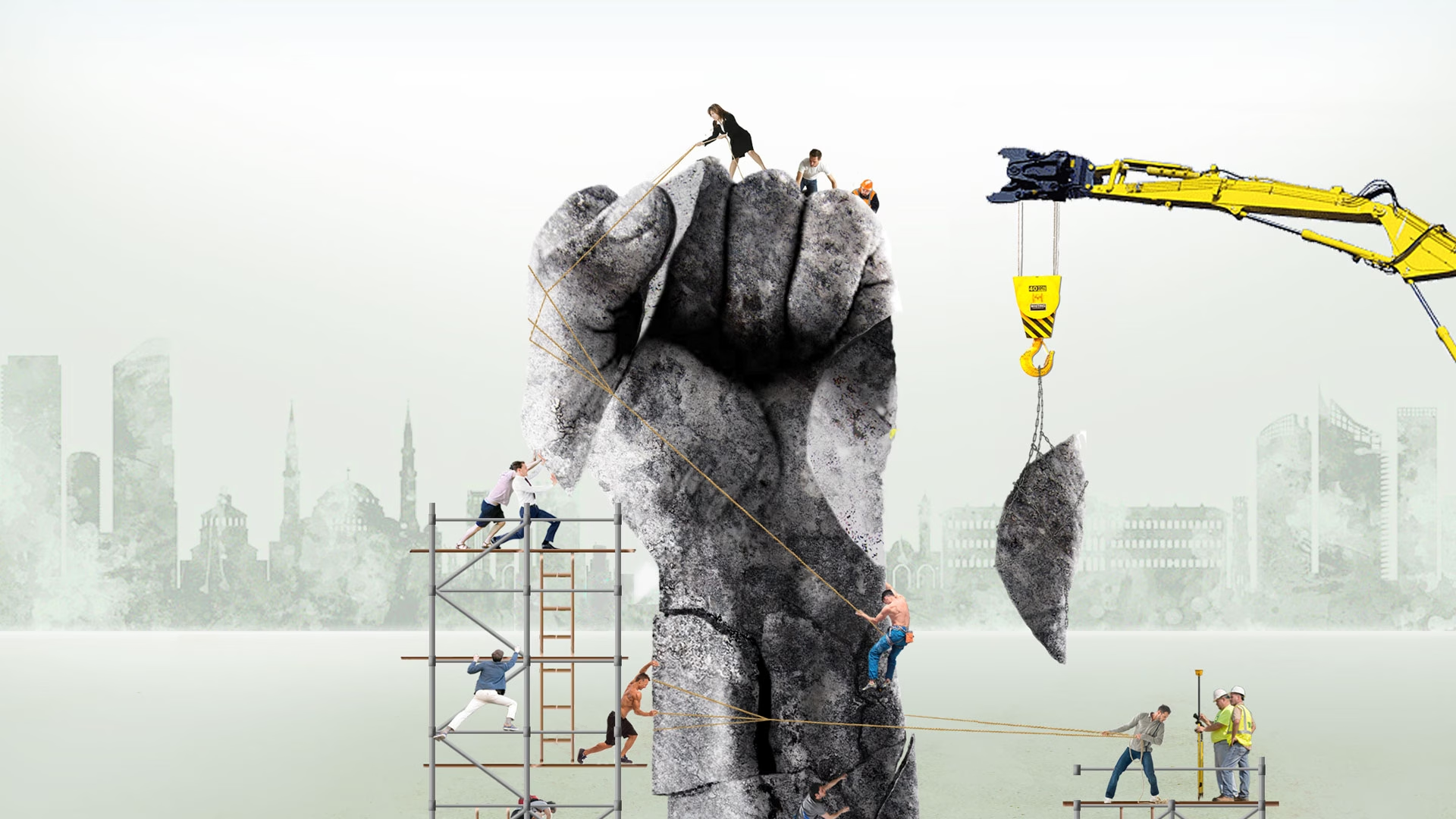
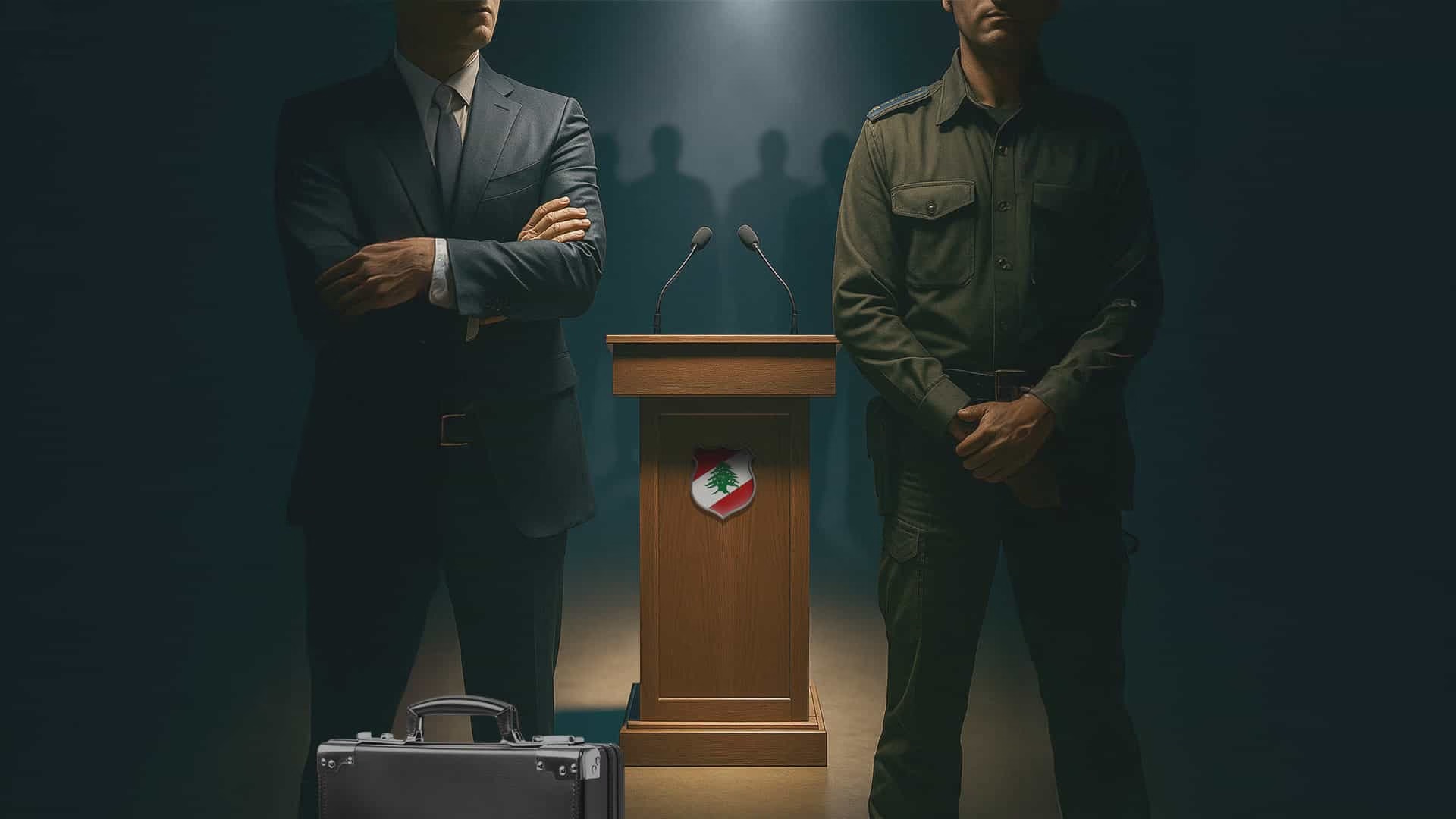

Lebanon’s long-ruling binary, the militia and the mafia, is teetering, providing the country’s progressive forces with a chance to push for genuine reform – but the window of opportunity is short, and failure to seize it risks entrenching malevolent forces in power for years to come.
The militia, Hezbollah, had long used its arsenal and the recourse to force it represented for outsized leverage in Lebanese politics. The mafia, the political-banking elites, had in turn used their cartel-like grip on the country’s commerce and their capture of state institutions to pilfer public resources. For decades, these two camps – at times competing, at others cooperating – have together stifled governance reforms and suppressed efforts to increase transparency and accountability in policymaking.
Lebanon’s 2019 financial collapse and its ongoing fallout exposed the political-banking elites for the kleptocrats they are, shaking their hold on the country and helping to give birth to the so-called “Change Movement”, which saw 13 members of parliament elected from outside the traditional status quo in the 2022 elections. The recent war with Israel has similarly left Hezbollah reeling and its influence in retreat. The Lebanese army has since been taking concrete steps to bring all arms in the country under state control.
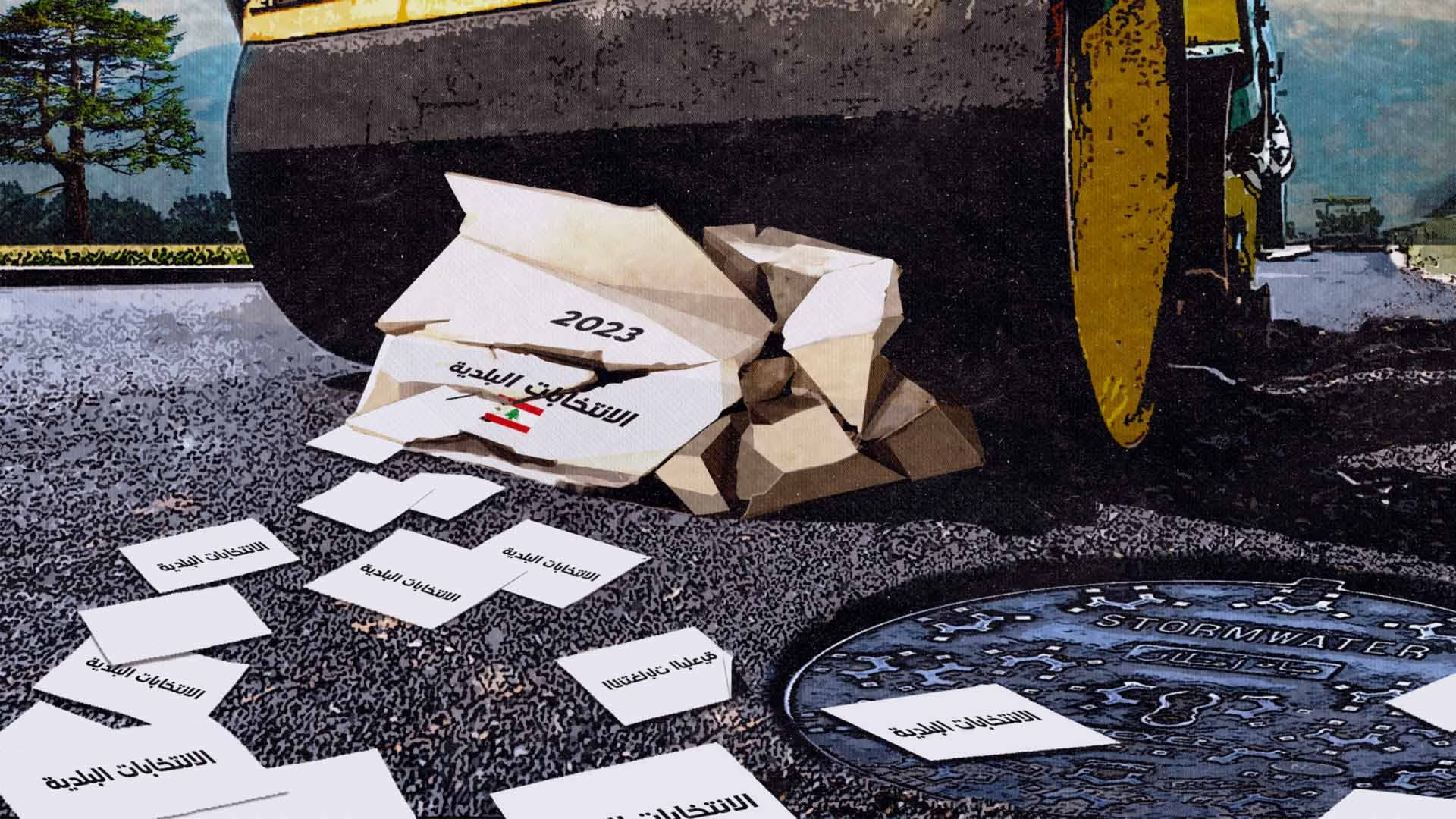
With the 2026 parliamentary elections around the corner, progressive actors in Lebanon have no choice but to assert themselves forcefully into the political process. This requires assessing their failures and successes since 2022, applying this learning to expand their resonance with the public and increase their numbers in the coming parliament, thereby continuing to break the grip of the ruling binary. Should they fail to do so, the risk is that a resurgent political-banking elite will itself fill the void left by Hezbollah, and the kleptocratic class will cement its hold on power.
The attacks on Lebanon’s progressive forces are already underway. Lebanese banker Antoun Sehnaoui and affiliated media outlets, primarily MTV, have been leading defamatory campaigns against independent media platforms, such as Daraj and Megaphone, advocacy group Kulluna Irada, and a long list of independent voices – including Badil – in an attempt to skew public discourse in favor of the financial elite. As Lebanon continues negotiations with major donors to help end the economic crisis – particularly the International Monetary Fund, which is itself pushing for banking transparency and restructuring – revitalizing the country’s political economy is an issue that has been insidiously absent from headlines.b
A countervailing force to the mafia’s attacks is Prime Minister Salam’s new cabinet and their firm stance on state-building, which should be seen as an opening that progressive forces can and must leverage to expand their voices in the political arena. Despite the litany of past disappointments and the logistical and organizational challenges that progressive actors face, remaining despondent on the sidelines in this critical stage of Lebanon’s history is not an option – lest we condemn the next generation to continue living with indignity and injustice.
Independent movements, carrying momentum ignited by the 2019 uprising, were able to achieve several breakthroughs in the tightly knit power-sharing system that traditional parties monopolize.
First, anti-establishment actors exposed a significant political weakness in Hezbollah’s allies. In the 2022 parliamentary elections, anti-establishment candidates Firas Hamdan and Elias Jarade were able to win seats allocated for their respective sects in the South 3 constituency, ousting the Amal- and Hezbollah-backed candidate, banker Marwan Kheireddine, and the Hezbollah-allied Syrian Social Nationalist Party candidate Assaad Hardan. In the Chouf-Aley constituency, anti-establishment candidate Mark Daou was also able to unseat Hezbollah ally and Lebanese Democratic Party leader Talal Arslan.
The primary unifying feature of the “pro-change” MPs has been their opposition to traditional political parties; what they lacked is a collective, coherent vision for an alternative future for the country.
Additionally, a number of independent MPs contributed to nominating Judge Nawaf Salam to form a reform-oriented government.
However, the main common denominator among the “change” MPs remained their opposition to traditional parties, while they lacked a cohesive collective vision for an alternative future for the country. In reality, these MPs span a wide political and ideological spectrum, even though mainstream media and the broader public continue to portray them as a single bloc. This ambiguity was further exacerbated by the failure of the movement’s leaders to establish solid parties with clear programs and organized grassroots bases.
Today, what remains of the anti-establishment movement is a loose coalition of existing MPs, sector-based initiatives, and a few local networks.
This tension – between the new MPs’ varied public policy positions and the popular expectation that they present a unified platform for change – led to growing public disillusionment following the last election: as Lebanon’s multifaceted crises deepened, the lack of tangible progress became increasingly perceived as a failure of the “pro-Change” MPs collectively. Today, what remains of the anti-establishment movement is a loose coalition of existing MPs, sector-based initiatives, and a few local networks.
Blueprint for a Brighter Future
Today, more than ever, progressive actors need to rise to the challenge of filling the void left by a retreating Hezbollah and benefit from the presence of a government willing to take decisive steps for reform. Now is our chance to restart our country’s state-building process, to build a foundation of social justice, sustainability, and national sovereignty. This requires new political leaders to articulate long-term visions and political movements that are sustainable, locally rooted, ideologically clear, and bold in their discourse.
While the 2019 uprising inspired hope, progressive actors must recognize that the “pro-change” label has lost resonance and credibility in the eyes of the public today. Lebanon needs new political parties that articulate a clear and compelling vision for the political system they seek to build.
Competing with the financial power of traditional parties demands a shift away from scattered, short-term donor support toward independent, self-sustaining fundraising models.
fundraising models.
Organizationally, this means setting up internal governance mechanisms that strike a balance: they cannot be so horizontal as to stall decision-making in a fast-moving context, nor so hierarchical as to stifle the plurality of views required in a complex political environment. These parties also need to develop sustainable sources of funding. Competing with the financial power of traditional parties demands a shift away from scattered, short-term donor support toward independent, self-sustaining fundraising models. Importantly, ideological clarity and political branding should not lead to isolation from other non-traditional parties and movements, but rather be used to stake out policy priorities in any prospective strategic coalition building.
The formation of such visionary, grounded political groups would lay the groundwork for long-term projects capable of competing for power, while also creating vital cultural spaces and communities of political engagement. These spaces could produce positive externalities: reviving intellectual energy among a disillusioned public and providing platforms for solidarity, creativity, and collective hope.
While this path is long, the next crucial step is the upcoming parliamentary elections. In meeting my fellow political organizers from across the country, I hear fears that these elections may signal the death of the anti-establishment movement in Lebanon. The challenges are enormous; however, despondence is not an option, and we must seize every opportunity to stay afloat, to prevent the forces of violence and corruption from tightening the hegemony they have always enjoyed.
Marwan Issa is a Non-Resident Fellow at Badil | The Alternative Policy Institute