
Lebanon’s secular reformist movement is heading into the 2026 parliamentary elections with a broken playbook. The energy sparked by the 2019 uprising yielded modest electoral gains in 2022 but little organizational muscle to build lasting political influence. Progressive forces now face a stark choice: use the coming elections as a springboard to rebuild from the ground up or risk losing the space they have carved out in an entrenched sectarian order.
Winning Seats, Losing Ground
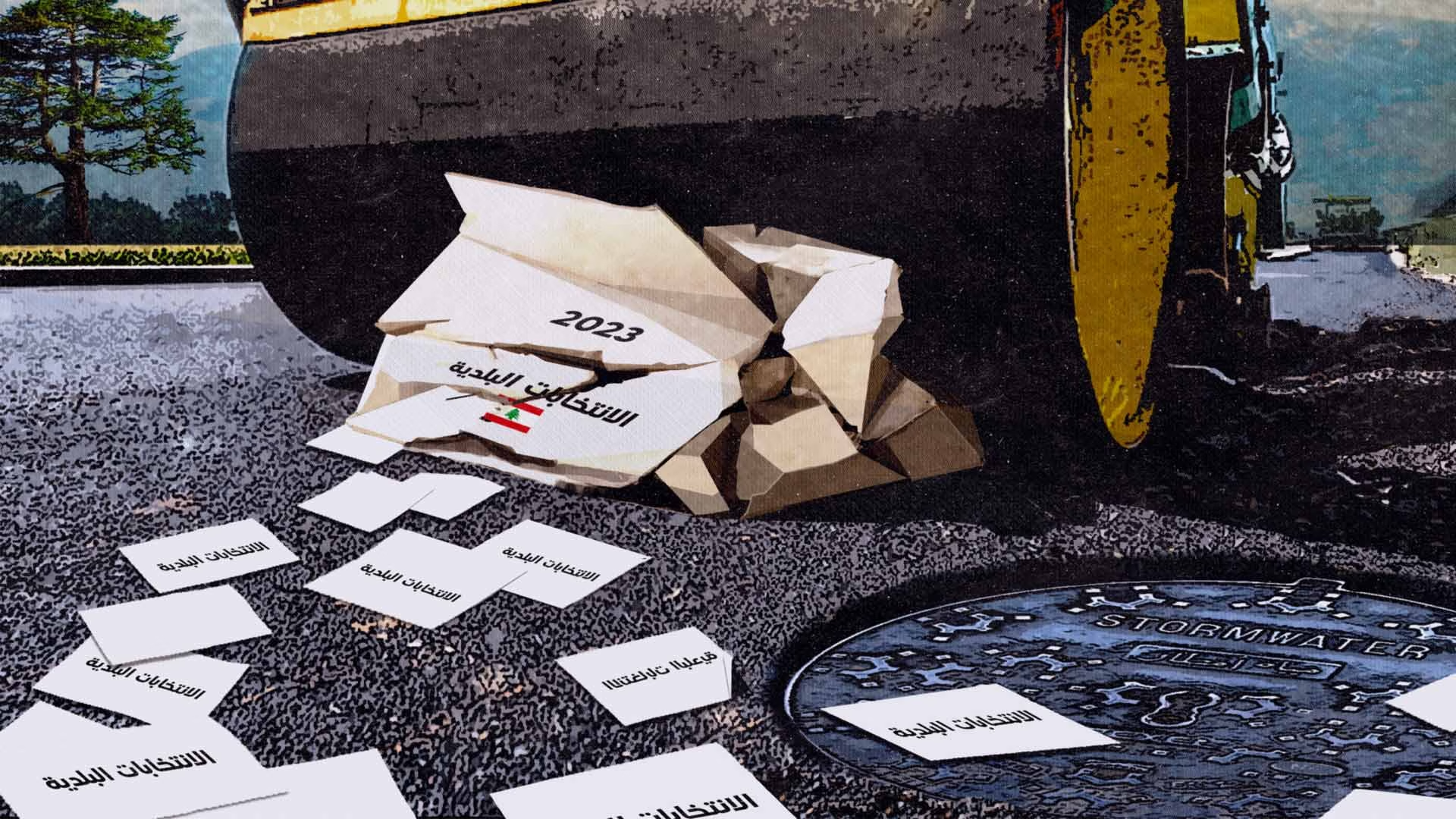
The movement’s trajectory helps explain this predicament. Secular forces began gaining renewed traction in 2011, when protests inspired by the Arab Spring called for sweeping reforms of Lebanon’s confessional system. Momentum grew over the next decade, reaching its peak with the October 2019 uprising. In 2022, activists shifted from street protests to electoral politics, winning 13 parliamentary seats under the banner of the “Change Bloc.” But after the vote, organizers stepped back from grassroots mobilization, leaving newly elected MPs to carry the movement forward. Most of these lawmakers entered parliament without the party structures, local networks, or political experience to push a coherent reform agenda.
Nawaf Salam’s appointment as prime minister in early 2025 was seen as a boost for secular reformist forces, but it has done little to strengthen them on the ground. A respected jurist and longtime critic of the confessional system, Salam draws legitimacy from his technocratic credentials and international standing but has never run for elected office or built a grassroots base. As sectarian polarization escalates, the public backing that propelled Change Bloc candidates in 2022 has largely evaporated. The latest municipal elections underscored this decline: aside from a few localities in Mount Lebanon, the results marked a major setback for secular contenders.
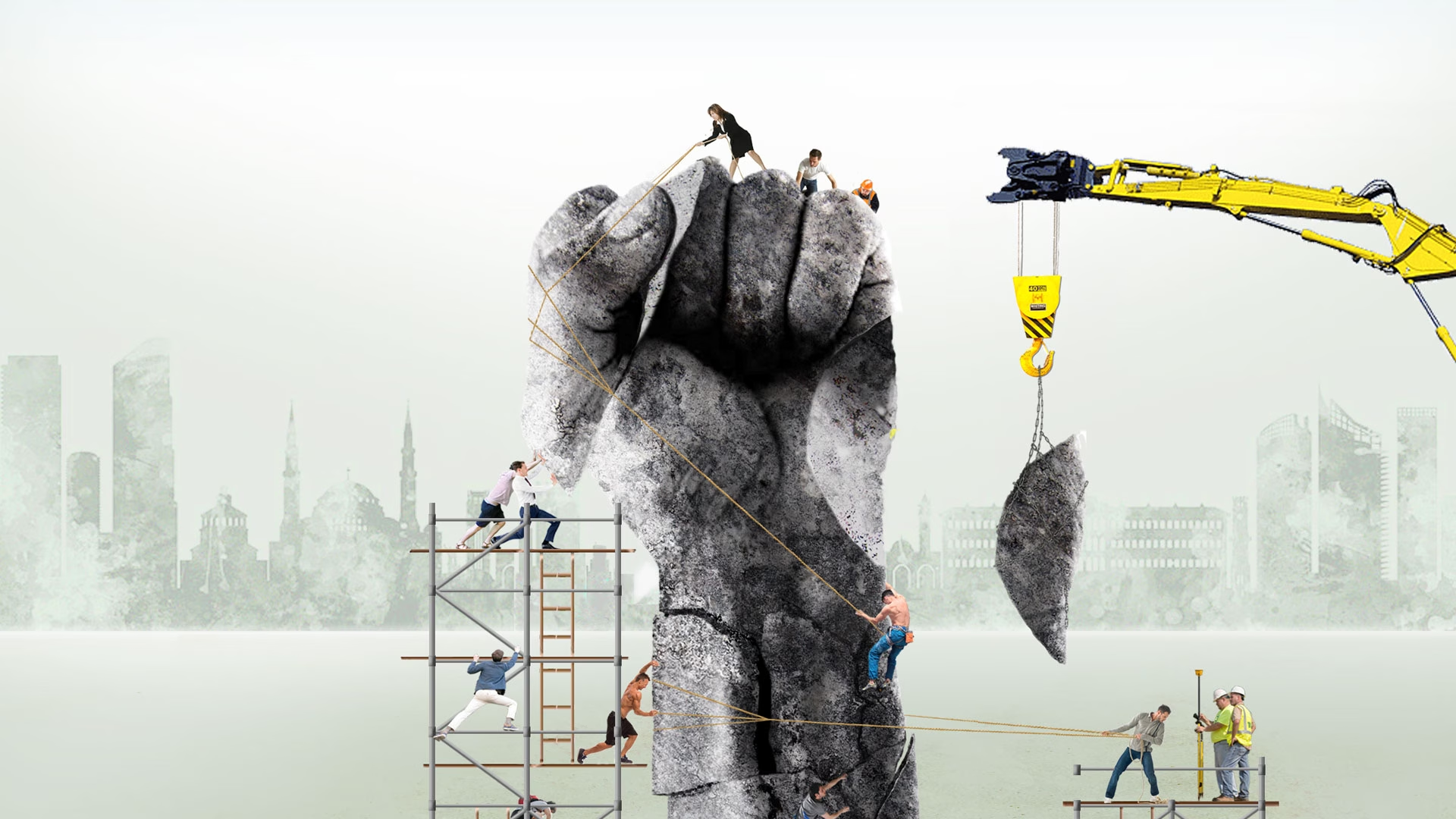
Secular forces must move beyond a focus on short-term gains and reimagine the electoral process as a vehicle for grassroots engagement and community building
Caught between structural weaknesses and fading public support, the movement faces an existential test: how to use the 2026 elections not just to win seats but to rebuild itself. The tactical imperative is fielding credible candidates who can capitalize on shifting political dynamics to run viable campaigns. But the strategic struggle runs deeper. Secular forces must move beyond a focus on short-term gains and reimagine the electoral process as a vehicle for grassroots engagement and community building across Lebanon and the diaspora. This means nurturing a political and cultural project that can sustain momentum between election cycles and restore trust with a disillusioned public.
The Beirut Madinati Model: Innovative but Unsustainable
The challenge of channeling grassroots energy into organized political structures confronted Lebanese activists during the 2015 garbage crisis. When trash piled up on the streets that summer, a wave of anti-establishment protests erupted under the slogan “You Stink.” These street campaigns against the sectarian elite marked a turning point in political activism, mobilizing grassroots action through a network of volunteer activists rather than formal organizations or parties.
Beirut Madinati emerged from this groundswell to contest the 2016 municipal elections, offering a fresh alternative to the sectarian politics that produced the garbage crisis. Led by activists and academics, the campaign combined an agile structure, a clean ethos untainted by corruption, and a citizen-centered platform with broad public appeal. Packaged in a polished brand identity, its 10-point program proposed technocratic solutions to everyday problems like waste management, public transport, and affordable housing. This pragmatism did not dilute activists’ critique of the sectarian order. But instead of leading with ideological confrontation, Beirut Madinati framed its message around civic responsibility and stewardship of public goods – an approach that resonated with a cross-section of voters fed up with dysfunctional governance.
This model was replicated during the 2018 and 2022 parliamentary elections and nearly every syndicate race. The formula became familiar: exploit political crises for short-term gains, build media-savvy brands around the lowest common denominator among progressive actors, and ride waves of public discontent against the ruling parties. The result was modest shifts in discourse but minimal organizational progress.
Ultimately, what began as a promising experiment in grassroots politics became a cautionary tale: the campaign model showed what was possible, but not how to make it last.
Beirut Madinati proved effective in the short term, with a strong showing in the polls, but struggled to evolve into a lasting political force. Most campaign structures dissolved after elections, taking voter data and organizing capacity with them. Candidates lacked accountability to grassroots bodies, and no organizational infrastructure remained to absorb new recruits. Ultimately, what began as a promising experiment in grassroots politics became a cautionary tale: the campaign model showed what was possible, but not how to make it last.
Elections as Engines for Grassroots Organizing
Secular forces must take stock of these lessons to build durable organizations with deep roots in communities. Historically, labor syndicates were a key vehicle for grassroots engagement, especially before the Lebanese civil war. Sectarian parties have since co-opted these institutions, leveraging post-war state spoils and patronage networks to consolidate power. Meanwhile, economic collapse, mass emigration, and the rise of informal labor have fragmented the working class and eroded traditional structures of worker solidarity. Neighborhood committees once offered another avenue for organizing, but here too the ground has shifted: face-to-face engagement is moving online, and the exodus of young people has left neighborhoods in constant flux.
The way sectarian collectives play the electoral game is far more sophisticated. They engage family networks, community leaders, volunteers, and paid mandoubin (polling station agents) well ahead of the vote.
In this context, elections serve a critical function: they compel organizers to quickly articulate electoral strategies, forge alliances, refine messaging, and engage tens of thousands of constituents within a compressed timeframe. Electoral campaigns are therefore inherently suited for mass mobilization. Yet secular actors have often been reduced to “platform candidates” – acting more like individual influencers responding to their followers than representatives of an organized political movement.
In contrast, the way sectarian collectives play the electoral game is far more sophisticated. They engage family networks, community leaders, volunteers, and paid mandoubin (polling station agents) well ahead of the vote. Most critically, instead of relying on short-lived campaigns, they cultivate political communities by continuously onboarding new members, investing in local leadership, and reinforcing shared principles. Islamist movements in Beirut exemplify this approach, demonstrating how consistency, centralization, and deep immersion in communities build power over time.
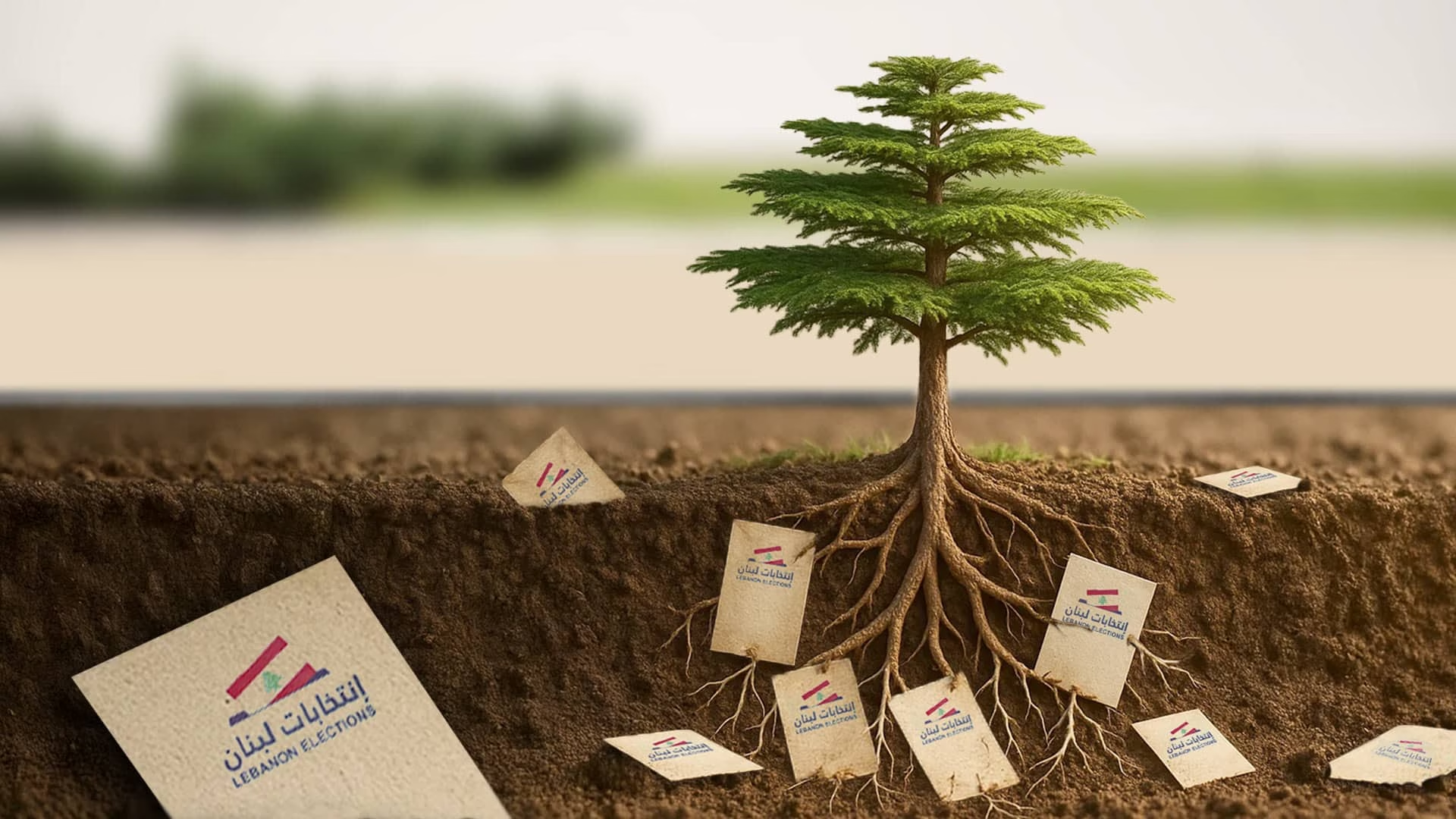
At the heart of this roadmap is recentering the grassroots, even if that spirit has faded in recent years.
The secular movement must learn from these methods and treat elections as just one milestone in a longer process of building loyal constituencies. First, it must establish socio-political collectives with a shared identity, stable leadership, and the ability to recruit and train new members year-round. Second, it must elevate local leaders who embody the movement’s values and are active within their communities beyond election cycles. Third, it must rally allies around overarching principles and goals, rising above the tactical disputes that have fractured secular forces in the past. Finally, it must break out of activist circles and get comfortable debating critics, in hopes of winning over ordinary citizens watching from the sidelines.
Beyond 2026
At the heart of this roadmap is recentering the grassroots, even if that spirit has faded in recent years. Winning votes is crucial, but surviving the 2026 elections cannot be the sole focus. What secular forces need most is to bring people into the process of building a movement strong enough to weather the storms ahead. This requires rethinking elections not as isolated contests for representation, but as recurring opportunities to expand the base, deepen community ties, and strengthen capacity. That work starts now.