
On the morning of September 1, 2025, a Syrian technical delegation — comprised of diplomatic, judicial, and security officials — visited Beirut for extended talks with Lebanon’s Deputy Prime Minister Tarek Mitri. The discussions addressed a range of sensitive issues, including judicial cooperation on detainees; border control and anti-smuggling measures; regulation of cross-border movement; and the fate of missing and forcibly disappeared persons. Far from an isolated event, the meeting signaled a changing approach to Lebanese-Syrian relations after decades marked by an imbalance of power.
This imbalance took hold in the aftermath of the Gulf War, when then-Syrian President Hafez al-Assad was granted sweeping powers over Lebanese affairs. At the time, Syrian influence was exercised through “guardianship” figures like military and security chiefs Ghazi Kanaan and Rustum Ghazaleh — strongmen who operated much like colonial-era consuls once did across the Arab world. Lebanon was subjected to a system of political and security control that took many forms, from joint security and military committees to restrictions on Lebanese leaders’ visits to Damascus, which were confined to official business. Druze chief Walid Jumblatt was the only Lebanese leader exempt from these constraints.
The goal is neither to break with the past nor return to it, but to forge a balanced neighborhood. This begins with practical, measurable steps that pave the way for a legal framework to govern bilateral relations on more equitable and realistic terms.
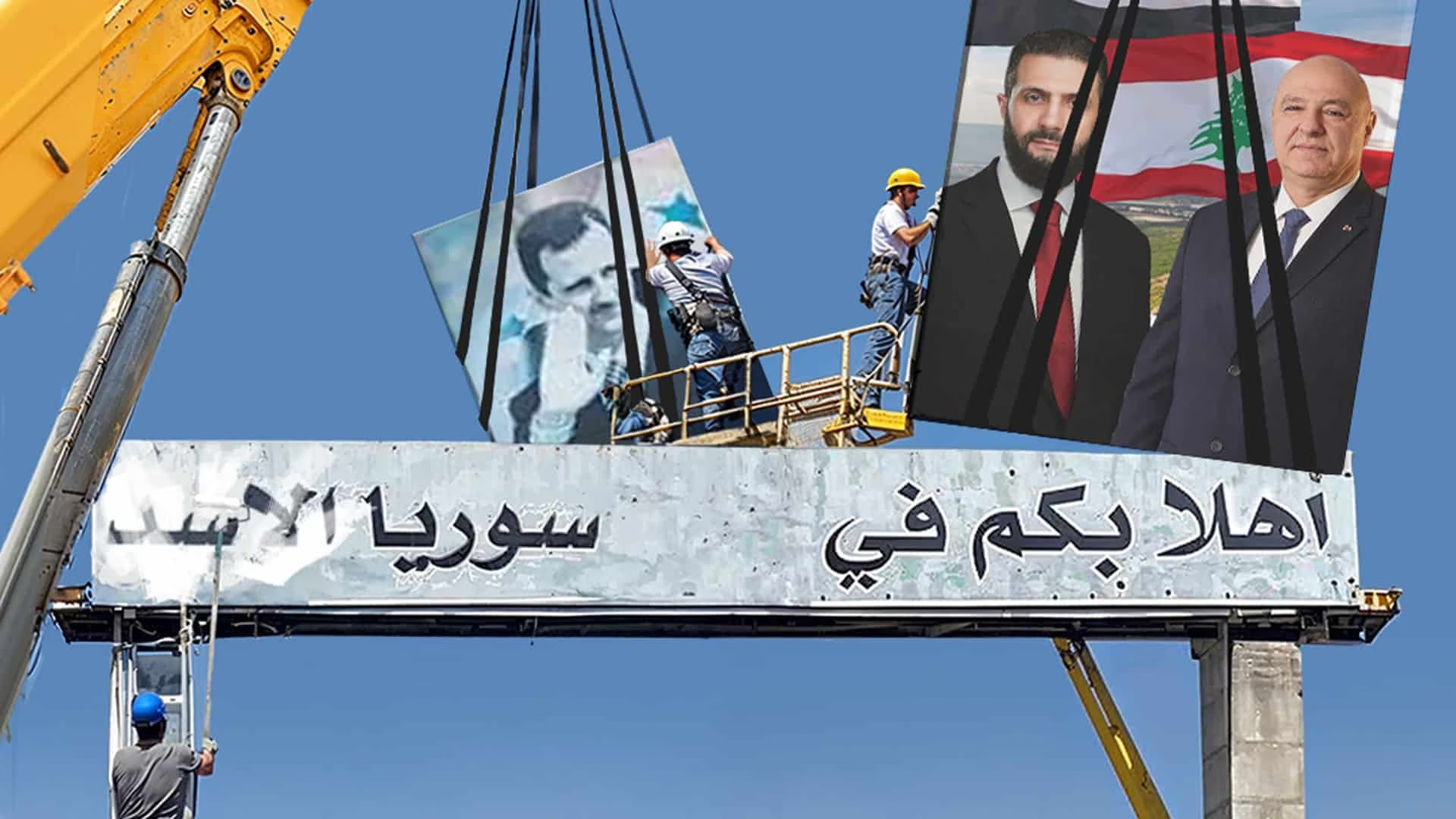
Today, with Ahmad al-Sharaa as Syria’s president and Nawaf Salam as the prime minister of the Lebanese government, a new dynamic is taking shape: an effort to manage the relationship through the language of statehood rather than guardianship. This shift opens the door to a pragmatic approach grounded in sovereignty, border control, and management of the Syrian presence in Lebanon in both humanitarian and security terms. The goal is neither to break with the past nor return to it, but to forge a balanced neighborhood. This begins with practical, measurable steps that pave the way for a legal framework to govern bilateral relations on more equitable and realistic terms.
The 1991 Treaty: A Framework for Syrian Dominance
The Treaty of Brotherhood, Cooperation, and Coordination was signed in 1991, following the end of the Lebanese Civil War and the Taif Agreement, amid a regional realignment shaped by the post-Gulf War order. Lebanon effectively became a “consolation prize” for the Assad regime in exchange for Syria’s symbolic participation in the war supporting the international coalition against Iraqi President Saddam Hussein. The arrangement had clear American backing: Washington believed that giving Damascus the upper hand in Lebanon would maintain stability and prevent a power vacuum that could upset the regional balance.
A pragmatic proposal is emerging that is neither an abolition of the treaty nor a revival of guardianship. Instead, it envisions a calm review to retain useful technical arrangements while stripping the text of its heavy symbolism. The aim is to lay the foundation for a more modern legal framework that enshrines sovereignty, improves governance, and establishes binding mechanisms for dispute resolution and periodic review.
The 1991 treaty was far more than a declaration of intent. It was accompanied by a web of defense, political, economic, and judicial protocols that entrenched Syrian tutelage over Lebanon. The security protocol provided legal cover for the continued presence of Syrian troops and obligated Lebanese security agencies to coordinate with Damascus. The political protocol gave Syria veto power over Lebanon’s foreign policy decisions. The economic protocol imposed an asymmetrical relationship that favored Syrian markets. Meanwhile, the judicial protocol was used to extradite Lebanese dissidents to Damascus. Alongside these measures, the Lebanese-Syrian Higher Council was established as a supreme authority overseeing Lebanese institutions. The treaty thus functioned less as a pact of cooperation and more as a codified framework for Syrian hegemony.
For years, the treaty became both a symbol and a pathway: a symbol of heavy-handed tutelage that weighed on the Lebanese psyche, and a pathway to functional arrangements that helped maintain stability but constrained Lebanon’s independence and the ability of the state to pursue other partnerships. It was also a stark reminder of the axiom that “geography is destiny.”
Even after the Syrian army withdrew in 2005, marking the end of the military aspect of tutelage, the 1991 treaty and its protocols remained legally valid. The Higher Council continued to exist, though it was largely dormant. Some degree of security and administrative coordination also persisted out of necessity – on issues such as border control, smuggling, crossings, and judicial cooperation – particularly given the absence of any mechanism for periodic review of the agreement.
Today, the treaty returns to the forefront of debate for three reasons: a shifting scene in Damascus, characterized by a new “state-to-state” discourse; a Lebanese public mood increasingly aspiring for genuine sovereignty; and a changing regional environment in which grand bargains are giving way to gradual, step-for-step arrangements.
In this context, a pragmatic proposal is emerging that is neither an abolition of the treaty nor a revival of guardianship. Instead, it envisions a calm review to retain useful technical arrangements while stripping the text of its heavy symbolism. The aim is to lay the foundation for a more modern legal framework that enshrines sovereignty, improves governance, and establishes binding mechanisms for dispute resolution and periodic review. Both al-Sharaa and Salam have emphasized this approach in their public statements.
Challenges to Bilateral Relations
The first major challenge concerns Syrian detainees in Lebanese prisons — an issue that encapsulates the dysfunctions of both systems. Pretrial detentions have stretched far beyond legal limits, while a backlog of cases has accumulated, ranging from residency violations and administrative errors to purely criminal cases that should not be conflated with politically sensitive ones. Estimates suggest that the number of Syrian detainees and convicts in Lebanon ranges between 1,800 and 2,200 individuals, making up nearly one-third of the total prison population. Meanwhile, the fate of hundreds of Lebanese detained in Syria during the 1990s and post-2005 period remains unknown.
This complex situation provides fertile ground for populism. Instead of addressing the issue through a judicial and humanitarian lens, some Lebanese political forces exploit it to fuel anti-Syrian rhetoric and construct an internal-external enemy. This narrative becomes a tool to mask systemic corruption, blame the refugee presence for all of Lebanon’s crises, and feed a right-wing isolationist discourse that reinforces divisions and obstructs realistic solutions.
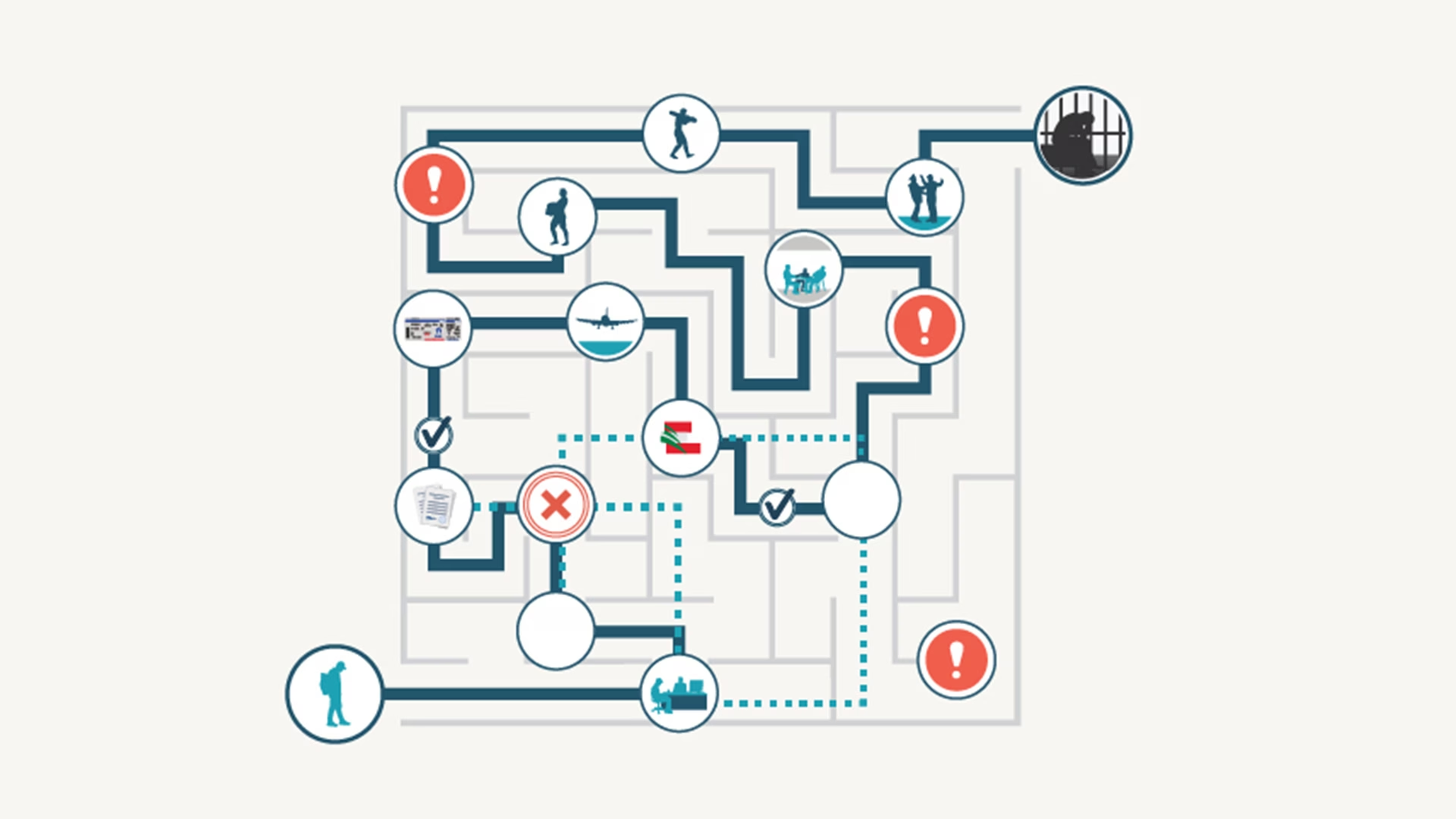
A sensible approach requires unpacking the complexities, not oversimplifying them. Concrete steps include categorizing detainees based on individual cases; expediting trials for those in prolonged pretrial detention; establishing a judicial memorandum of understanding for prisoner exchanges or deportations, with legal and humanitarian guarantees; and creating a joint committee to regularly review and update detainee lists. These straightforward, practical measures would ease tensions on both sides of the border while boosting the credibility of the state-to-state discourse espoused by the two governments. Despite initial setbacks, there is shared momentum — and even external pressure — to address the issue through the justice and interior ministries in both countries.
The New Syria in the Eyes of Lebanon
Al-Sharaa’s rise to the presidency has redrawn Syria’s image in the Lebanese imagination, though it has not erased old fractures. Three Lebanese perspectives can be discerned — sometimes overlapping, yet often at odds.
The first is a historically skeptical view, especially among right-wing groups and others that fear the change is merely cosmetic and old mechanisms of influence may return in softer forms. These groups demand immediate application of the “state-to-state” principle and an end to any direct or indirect interference in Lebanese affairs. They tie any progress to measurable indicators rather than goodwill rhetoric.
Lebanon’s interests are best served by resolving outstanding issues at the lowest possible cost: fair judicial cooperation, effective border control, legal transit, and ultimately a calm discussion of the treaty framework.
The second is a cautious, pragmatic view shared by a broader spectrum of political and civil actors. It holds that Lebanon’s interests are best served by resolving outstanding issues at the lowest possible cost: fair judicial cooperation, effective border control, legal transit, and ultimately a calm discussion of the treaty framework. These actors judge al-Sharaa’s approach to Lebanon by deeds, not words.
The third perspective views the security-political relationship with Damascus as part of a regional deterrence system, but now faces a thorny internal dilemma over the Lebanese state’s monopoly on arms, the role of state institutions, and the limits of parallel legitimacy. These contradictions make automatic alignment with Damascus far more difficult than in the past.
For its part, the new Damascus is making an effort to send calculated signals of openness by establishing institutional channels, adopting legal rather than security-driven language, and declaring readiness to engage in carefully managed judicial and border cooperation. Yet all this remains mere rhetoric unless it translates into measurable weekly and monthly results that reassure skeptics and convince pragmatists that the era of tutelage has truly ended and the era of mutual interests has begun.
Toward a Balanced Neighborhood Formula
The most effective path forward will not be marked by brash declarations but rather the quiet accumulation of concrete outcomes. In the near term, a focused package of initiatives could have meaningful impacts, such as an activated judicial memorandum, a joint detainee committee with clear deadlines, a border operations room with real-time information sharing, a defined timetable for regularizing the administrative status of Syrians in Lebanon, and updated border transit arrangements. These practical steps require no fanfare, but they can build a reservoir of trust to be drawn upon in broader negotiations down the line.
With such incremental gains, proposing a balanced neighborhood agreement becomes a natural next step: a streamlined text that would gradually replace the 1991 treaty, enshrine sovereignty and non-interference, establish permanent sectoral committees with periodic reviews, and set binding mechanisms for dispute resolution. Its success depends on three conditions: sustained regional stability around Lebanon; Beirut’s ability to enforce the state’s monopoly on arms without triggering a security crisis; and Damascus’s capacity to transform its institutional discourse into consistent practice across its state apparatus.
Any serious review of the 1991 Treaty of Brotherhood, Cooperation, and Coordination cannot be limited to patching outdated and vague provisions. It requires fundamental amendments targeting the core mechanisms that enabled Syrian hegemony in the past. Chief among these is the Lebanese-Syrian Higher Council, which effectively became a parallel authority superseding Lebanon’s constitutional institutions. As a necessary prerequisite for building a normal relationship, this council must be abolished and replaced with direct diplomatic channels, two fully functioning embassies, and specialized ministerial committees dealing with sectoral issues on an equal footing.
On the economic front, it is essential to form a joint economic team with clear, time-bound powers to oversee land transit issues, regulate customs duties, and manage energy, electricity, and gas projects. This body would also facilitate the movement of goods and people within legal frameworks aligned with international standards, helping both countries avoid the pitfalls of sanctions and other external constraints.
Alongside the official track, a complementary process led by Lebanese and Syrian civil society is needed to transcend the legacy of the past three decades and the scars it has left on collective memory. This dialogue should bring together human rights groups, trade unions, academic institutions, and media outlets to dismantle stereotypes and build common ground around humanitarian, cultural, and educational issues. By reshaping the relationship from the ground up, such efforts would give a grassroots dimension to state-level processes and strengthen public confidence in the possibility of meaningful, lasting change.
This is not a moment for grand promises, but for small steps that can alter the course. If Beirut and Damascus succeed in making tangible progress on their most sensitive issues, the conversation will shift from identity politics to the practical management of mutual interests. Only then can the 1991 treaty evolve from a burdensome legacy into a starting point for a modern framework. This transformation would end the prolonged antagonism and help set the path towards a dynamic of equal and shared responsibilities between neighbors.