The End of Pretend: Lebanon Will Reconstruct When It Changes Its Taxation System

With foreign aid drying up and the old debt-fueled model exhausted, rebuilding the country depends on whether Lebanon’s elites pay their fair share.

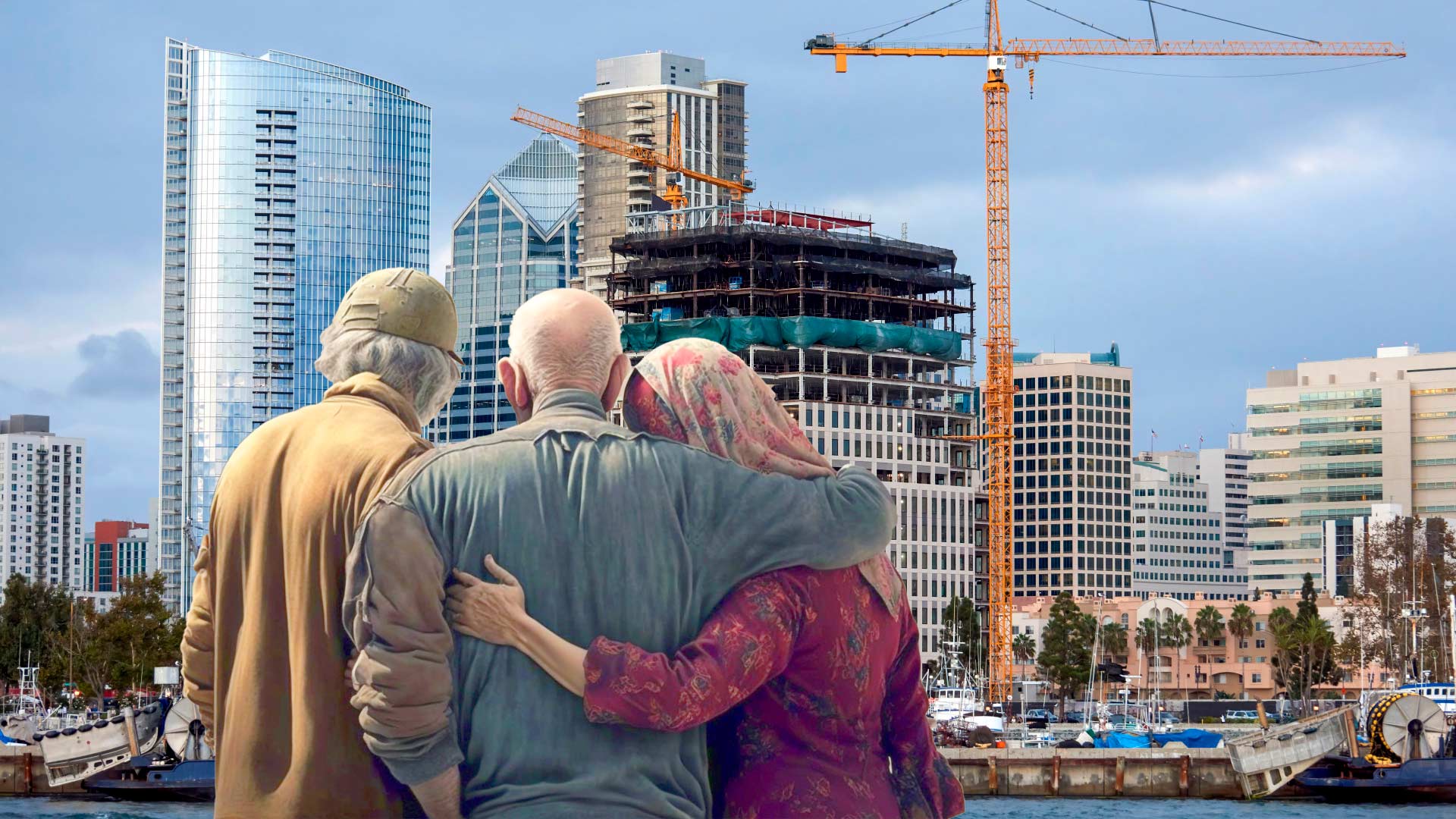
The wars of 2024 and 2026 have been devastating, and now we have the bill: an estimated $20 billion in damages, with schools, hospitals, and whole towns destroyed by Israeli attacks and the ongoing fighting. This in a state that has yet to recover from the 2019 economic collapse.

So while peace and reconstruction are the most pressing needs, the true challenge runs much deeper: effective healthcare, social protection, infrastructure, and defense all require a state with far greater fiscal capacity than currently exists. The erosion of already weak public services, hollowed out further by the collapse, has seeped into our mental state: even before the latest two wars, 62.8% of Lebanese were testing positive for symptoms consistent with at least one mental disorder. At this point, if the state cannot provide a viable model for its reconstruction, it threatens to lose its entire purpose.

Borrowed time

This is not the first time we have faced the long road to reconstruction. The end of the 15-year civil war in 1990 left the country with at least $25 billion in physical damage (roughly $60 billion in today’s dollars). The enormous reconstruction needs and a severely eroded revenue base meant the government had one answer: borrowing. At the time, more than two-thirds of capital expenditure was financed through market borrowing at high interest rates, while public debt rose from around $2 billion at the start of the decade to $25 billion by 2000 — 150% of GDP. The rest has become a familiar story.

This system of borrowing, together with a dependence on a range of foreign backers, was bound to crash.

Lebanon’s post-war revival became closely intertwined with the revival of its banking sector. Its banks attracted deposits through high interest rates, exchange-rate stability, and strict secrecy, then channeled much of those funds into government debt — a mutually reinforcing relationship in which the state gained financing and banks earned steady returns from lending to it. Financial and political interests became increasingly entangled: a 2023 BADIL investigation found that a quarter of board members at Lebanon’s 15 largest banks qualified as politically exposed persons.

Borrowing also served a political function, letting governments finance reconstruction and patronage without confronting who should pay for it through taxation, while banking secrecy made wealth harder to scrutinize and tax. Meanwhile, Hezbollah and Iran undermined the state’s sovereignty by building a parallel financing channel of their own, with the Hezbollah-affiliated bank Qard al-Hasan providing $3.7 billion in loans by 2021 since its founding in the 1980s.

This system of borrowing, together with a dependence on a range of foreign backers, was bound to crash. By 2019, public debt reached 160% of GDP and interest payments consumed roughly 32% of state expenditure. The system collapsed that year, destroying the financing mechanism the state had relied on for decades, along with people’s savings and livelihoods. Today, the state is in default to its creditors and can barely cover dismal public sector salaries or fund the Lebanese Armed Forces to take on the task of securing its borders. Yes, Lebanon is back on the road to reconstruction — if it ever truly left it — but with far fewer options.

Few cards left

The 2026 conflict is causing an economic contraction estimated at 7 to 10% of GDP, undermining the state’s ability to fund recovery through existing revenue. Nor are Lebanon’s old donors as willing. Western and Gulf partners, frustrated by years of stalled reforms and the pace of Hezbollah’s disarmament since the 2024 ceasefire, have increasingly used aid as leverage, asking more of the Lebanese state while offering less.

Support has therefore become dependent on an overstretched, underfunded LAF delivering on disarmament. Western military support for the LAF has been deliberately calibrated around internal stabilization rather than a credible challenge to Hezbollah (or Israel), at exactly the time the state needs to demonstrate it can assert control.

What all this means in practice is a fiscal contract of “pay little, get almost nothing”: the state collects relatively little from wealth and provides limited services in return, leaving households dependent on private provision and political networks, while indirect taxes like VAT keep lower-income households paying relatively more and staying relatively poor.

Progressive taxation reform is not a technical discussion: it’s a policy choice that will dictate whether the state actually continues to exist or fades away.

The wrong way out

In this context, progressive taxation reform is not a technical discussion: it’s a policy choice that will dictate whether the state actually continues to exist or fades away. The International Monetary Fund has explicitly warned against piecemeal revenue measures that fail to address how the tax burden is distributed. Economists, civil society, and international financial institutions have all called for closing exemptions on capital gains and dividends, expanding property taxation, ending preferential treatment for second homes and vacant properties, and strengthening enforcement.

There is no shortage of proposals. What is missing is the political will to rebalance who pays rather than keep reaching into the wrong pockets. The government’s reluctance to make difficult fiscal choices was already evident after the 2024 war. Despite reconstruction being heralded as a national priority, the budget submitted for 2026 was widely criticized for lacking any dedicated budget line or significant investment in this area.

Nawaf Salam’s government has reverted to the old ways, just like its predecessors. In February, the Cabinet imposed a new tax on gasoline and proposed raising VAT from 11 to 12%, with the VAT increase still pending parliamentary approval — punishing measures for lower-income households at a time when prices go up, but rarely down.

The latest available figures show that in 2025, domestic taxes on goods and services accounted for 54.6% of Lebanon’s tax revenue, including 43.1% from VAT, while taxes on international trade contributed a further 15.8%. Together, these consumption- and trade-related taxes generated approximately 70% of total tax revenue.

By contrast, taxes on income, profits, and capital gains accounted for 17.1%, of which taxes on wages and salaries made up only 6% of total tax revenue. Correcting this imbalance should be the government’s first priority if it is at all serious about funding reconstruction.

Lebanon’s inequality alone should have settled the question of the top tax rate years ago. The World Inequality Database estimates that in 2024, the richest 10% received approximately 49% of pre-tax national income, compared with only 11% for the bottom half of the adult population. The richest 1% alone pocketed roughly 20% of the total. In other words, a tiny sliver of the population takes an outsized share of the country’s income yet, under Lebanon’s current tax system, contributes relatively little in taxes.

Successive governments have known this and done little about it. Sensing trouble just before the 2019 collapse, elites in government raised the top marginal tax rate on employment income from 20% to 25% — still embarrassingly low by global standards.

Data from the Organization for Economic Cooperation and Development shows that 32 of its 38 member countries had combined top statutory rates of at least 30% in 2025, with rates reaching roughly 55% in Austria, France, and Japan once national, local, and supplementary taxes are counted together. A reformed tax schedule could easily justify raising Lebanon’s top marginal rate to 30%, introducing a new 35% bracket for exceptionally high earners, and indexing lower- and middle-income brackets to inflation to prevent fiscal drag.

Nor have any lessons been learned since the financial collapse. Just this month, under the guise of environmentalism, the government imposed a new ‘polluters excise tax’ — a progressive excise fee on imported products with rates of up to 3%, almost all of which will be passed on to the consumer at a time of rising prices. Taxing at the point of import or consumption is, of course, the easiest option for any government. It is not the one that fixes the problem.

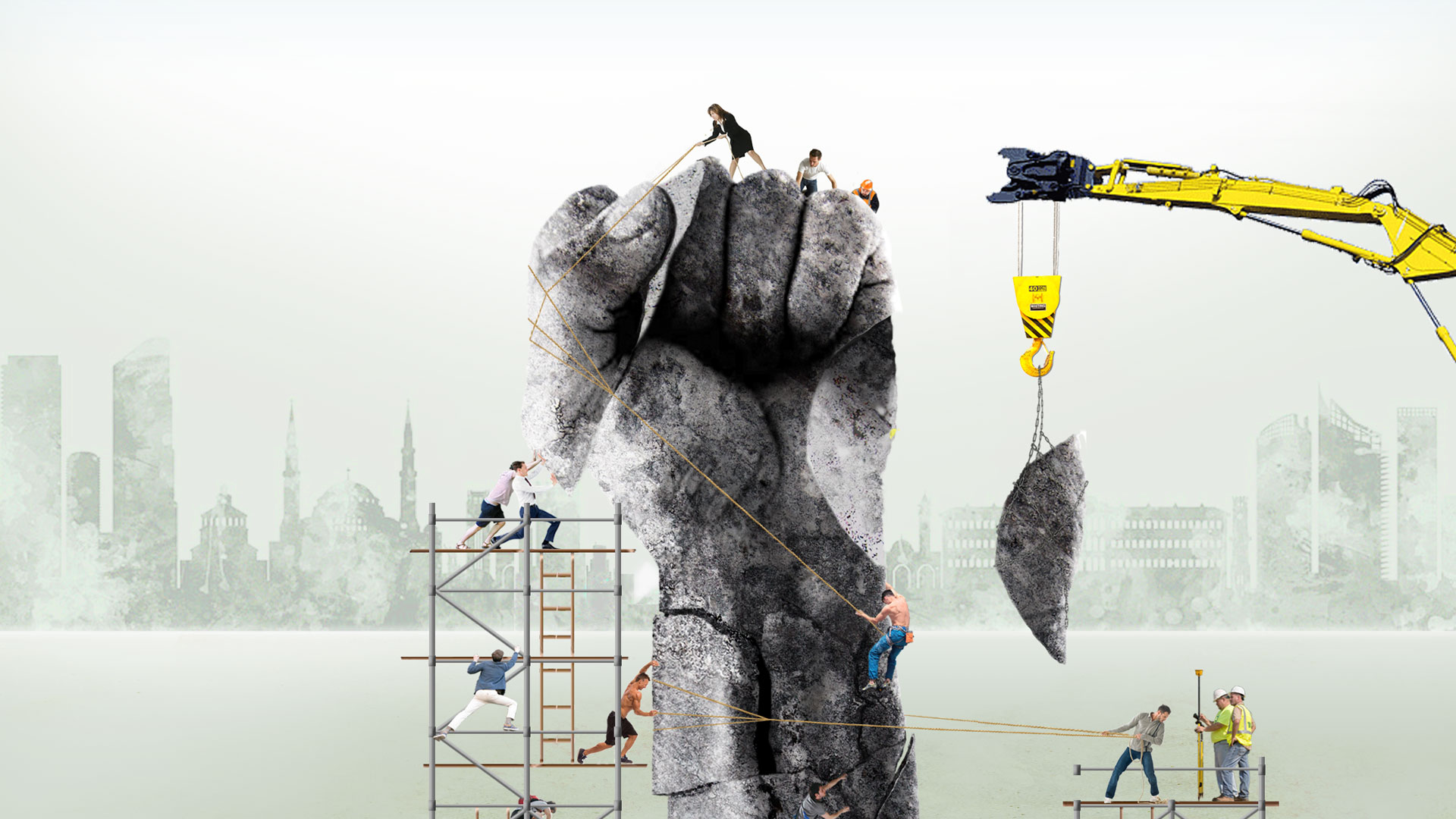
The reality is that real tax reform crashes up against elite interests that have shaped Lebanon's fiscal choices for decades. The good news is that the time has come for that to change — and there are signs it could.

No easy option

The reality is that real tax reform crashes up against elite interests that have shaped Lebanon’s fiscal choices for decades. The good news is that the time has come for that to change — and there are signs it could. This government has, to its credit, taken steps to improve tax collection, an area that has languished at abysmal levels for years. If that momentum continues, some estimate that tax revenue could rise proportionally by up to 50%.

However, even in that best-case scenario, the gain won’t come close to covering what the country needs: a 50% increase in the $4.65 billion in government revenue in 2025 would be nowhere near enough to fund the $20 billion reconstruction bill, let alone the reform of essential public services.

As the October budget session in Parliament approaches, the state has a choice. It can keep improving tax collection, shift the system toward one that is genuinely progressive, rebuild confidence in state finances, and eventually pave the way back into the debt market. Or it can resign itself to the “pay little, get almost nothing” fiscal contract, and pretend its usefulness isn’t rapidly deteriorating. For us Lebanese, neither path is easy. But only one of them makes sense.

Related