

Mental illness is running rampant in Lebanon, while political leadership responds with mind-numbing neglect to an extraordinarily wide and worsening crisis. Since 2019, the population has endured a financial collapse, a pandemic, the Beirut port explosion, and two wars, accumulating the kind of psychological burden that in any country with functioning institutions would have triggered a comprehensive state response.
Losing Our Minds: The Making of Lebanon’s Mental Health Catastrophe
How cascading crises and state negligence are fraying the national psyche
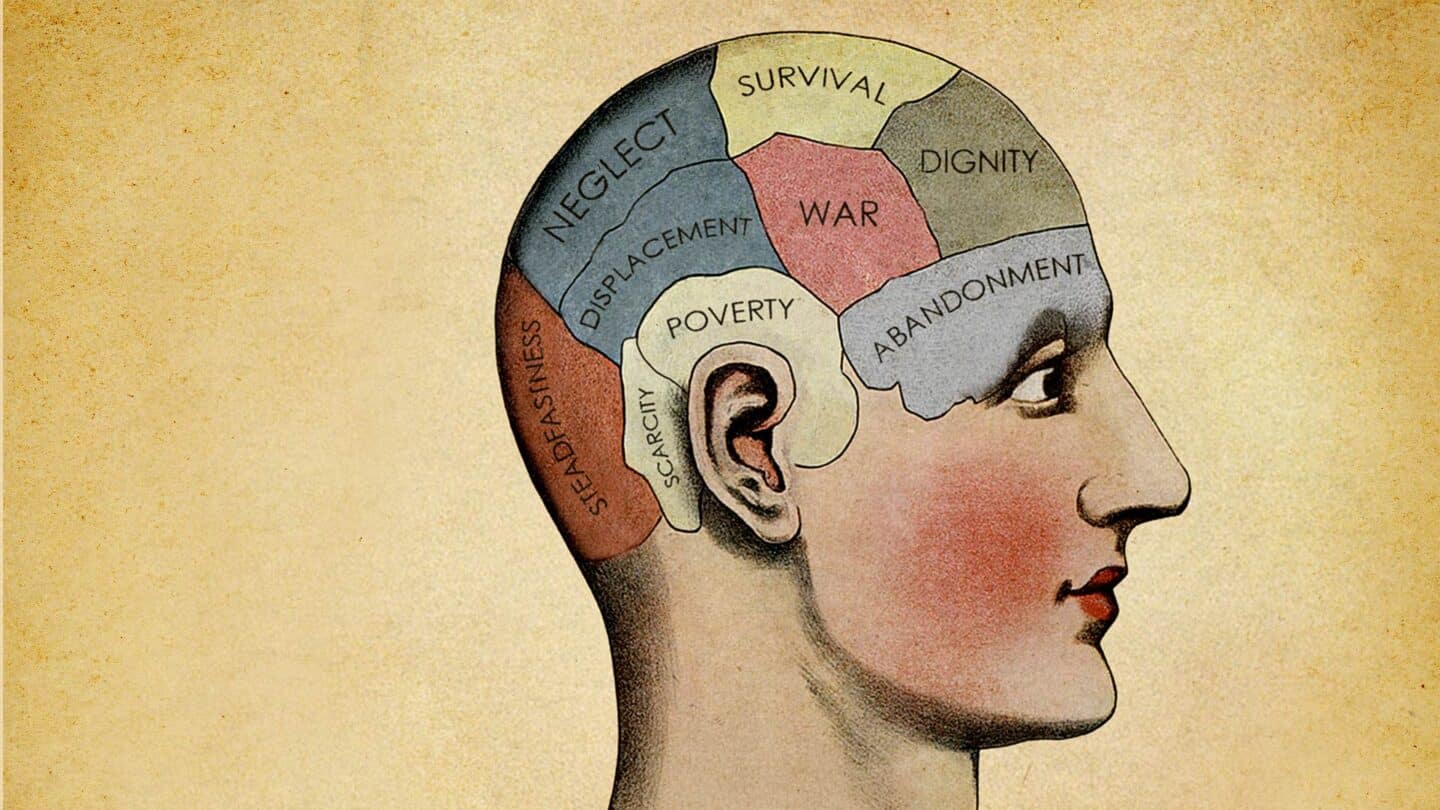
Before the onset of the 2023 war – 62.8 percent of Lebanese were already testing positive for symptoms consistent with at least one mental disorder.
As Lebanon sits today, in a nominal ceasefire with the Israeli occupation of the south displacing more than a million people, that response is still missing.
The numbers confirm what most Lebanese already feel: In 2022, mid-way through the cascade of recent catastrophes – following the port explosion but before the onset of the 2023 war – 62.8 percent of Lebanese were already testing positive for symptoms consistent with at least one mental disorder in a nationally representative survey: 47.8 percent for probable depression, 45.3 percent for probable anxiety, 43.5 percent for probable post-traumatic stress disorder (PTSD), with 28.1 percent screening positive for all three. The public’s demand for mental health assistance has paralleled the cascade almost exactly. Embrace Lebanon, which operates the country’s national emotional support and suicide prevention helpline, received some 1,500 calls in 2018, the year it launched. By 2023, it received almost 11,100, a sevenfold increase in five years. Primary healthcare consultations for mental health also grew 32 percent between 2020 and 2021, and a further 44 percent between 2021 and 2022.
The public’s “resilience” is asked to do the work of policy.
These figures could be attributed to an increase in awareness and an acceptance of seeking out mental health services amongst the population, but they do not absolve the government from assuming its responsibilities to respond to the crisis. However, thus far the state has largely offloaded its duty of care to the population: nongovernmental organizations (NGOs) and aid agencies attempt to fill the gaps in access to mental health services within the constraints of international donor funding, while people already living through repeated national tragedies carry the rest of the burden. In this scenario, the public’s “resilience” is asked to do the work of policy.
The state’s resultant negligence in mental health policy is traceable along three parallel tracks: a failure to enact effective mental health legislation, a failure to properly fund mental health services, and a failure to institutionalize the entity leading the national mental health response.
The Three-Fold Failure
Lebanon’s only dedicated mental health statute emerged in the throes of the Lebanese Civil War. President Amin Gemayel issued Legislative Decree No. 72 of September 9, 1983, during a period when Parliament was unable to convene, and the Council of Ministers was empowered to legislate by decree-law. Decree 72 was part of a wider executive push that produced several health-related instruments in the same week, aimed at reasserting state authority across an administration disrupted by years of war and the recent collapse of Asfourieh, Lebanon’s flagship psychiatric institution. It granted the state a legal framework for psychiatric custody, treatment, and admissions at a moment when those things had become socially impossible to ignore. Today, more than four decades later, Decree 72 is still the only effective mental health legislation.
What the law would do, in its current form, is establish a dedicated mental health division within the Ministry of Public Health (MoPH) with budgetary standing, create rights and protections.
A replacement has been in some stage of the legislative process since 2008. Backed by European funding, the original draft was prepared by Lebanon’s Institute for Development, Research, Advocacy and Applied Care (IDRAAC) and later on the research and advocacy organization Legal Agenda. It was subsequently submitted to Parliament, where it languished until being amended in 2014. At that point, the draft law focused narrowly on involuntary hospitalization and patients’ rights. After the National Mental Health Programme (NMHP) was established by ministerial decree in 2015, it took up the draft law and upgraded it from a parliamentary proposition to a Council of Ministers project for greater institutional weight, according to Maitre Nayla Geagea, a NMHP legal advisor. She added that the NMHP substantially rewrote the draft law over some 60 working sessions with the Parliamentary Committee and other relevant stakeholders.
The Health Committee adopted that revised draft, and it has since been awaiting passage through the Administration and Justice Committee, the Finance and Budget Committee, and a full chamber vote. What the law would do, in its current form, is establish a dedicated mental health division within the Ministry of Public Health (MoPH) with budgetary standing, create rights and protections aligned with Lebanon’s obligations under the UN conventions, regulate involuntary admission, and underwrite the community-based care model the ministry’s own strategy already endorses.
The national strategy reports that only 9.8 percent of Lebanese with a lifetime mental disorder seek professional help, with reported delays of between six and 28 years between disorder onset and first treatment.
What that financing structure produces, at the level of service delivery, is a system heavily weighted toward the most expensive and least therapeutic form of care. Lebanon has 1.3 psychiatrists per 100,000 population, against more than 10 in most high-income countries and a Middle East and North Africa average of around 2. The country operates five mental hospitals offering 28.5 inpatient beds per 100,000.
The national strategy reports that only 9.8 percent of Lebanese with a lifetime mental disorder seek professional help, with reported delays of between six and 28 years between disorder onset and first treatment. Insurance coverage is also fragmented: the National Social Security Fund covers only a limited number of inpatient psychiatric admissions, and most private insurers cover no outpatient mental health at all.
Within this architecture, the body that the Lebanese state has formally tasked with mental health policy occupies an unusual position. As noted, the National Mental Health Programme was created by ministerial decree in 2015, developed the country’s official strategy, and produced its draft mental health law. It has trained primary care workers across Lebanon, embedded mental health language into adjacent legislation on narcotics, the penal code, labour, and prison welfare, and conducted human rights assessments at 50 institutions.
the body that runs Lebanon's national mental health response is, institutionally, only a guest at the MoPH, with the government providing it zero funding.
However, the NMHP does not appear on the Ministry of Public Health’s organizational chart. Its 30 staff do not receive their salaries from the ministry or other government department. The NMHP’s single dedicated public psychiatric inpatient unit at Rafik Hariri University Hospital survives on international donor funds. Put differently, the body that runs Lebanon’s national mental health response is, institutionally, only a guest at the MoPH, with the government providing it zero funding.
The Tragedy Cascade
Since late 2019, the Lebanese have endured a financial collapse, a pandemic, the Beirut port explosion, the 2023-2024 war, and the 2026 war that resumed in March after the United States and Israel launched their war on Iran. The financial collapse, however, remains the persistent context that has compounded everything that followed. Currency devaluation pulled total per capita health expenditure from approximately $650 to under $50. Medication prices rose 1,123% between 2018 and 2022. The share of mean monthly income required to afford psychiatric medication grew almost 7.5-fold between 2019 and 2023. By 2023, 92 percent of Lebanese households reported being unable to meet all essential needs, with 64 percent reporting health care as their top unmet need. In short, mental health treatment became materially unaffordable for most of the population.
Local NGOs operating on international funding have borne the brunt of the frontline response to rapidly increasing mental health needs. For instance, Embrace, founded as a small awareness organization in 2013, became the operator of the national helpline in 2017, opened a free community mental health center after the Beirut explosion in August 2020, and launched a mobile mental health clinic in 2023. Skoun, the Lebanese Addictions Center, expanded its outreach during the 2024 war, providing support sessions to internally displaced people across Beirut and Mount Lebanon.
Despite NGOs upscaling in an attempt to meet demand, the population’s mental health is deteriorating at a faster rate than their services can keep up with, according to Tatyana Sleiman, Skoun’s executive director, adding that “every time a new service is created, it’s filling up very quickly.” She notes that the international funding landscape is also contracting precisely when the mental health needs are peaking, with mental health services being among the first on the chopping block when cuts are seen as necessary.
The 2026 war has only compounded the situation. More than 2,900 Lebanese have been killed since early March, with another 1.2 million people displaced as Israeli forces occupy the south and continue their erasure of villages. The current ceasefire, declared on 16 April and subsequently extended, has not stopped Israeli strikes or demolitions in occupied areas. Comprehensive statistics are yet to emerge regarding how this latest layer of compound shocks is impacting mental illness among a population where rates were already running above 60 percent, but it is almost certain that these rates are being pushed higher.
A State in Moral Debt
In the event of a major tragedy in any country, a traumatic response within a portion of the population is inevitable. What makes Lebanon remarkable is the series of catastrophic events the Lebanese have been subjected to, one after another, within a relatively short period. With one exception, every one of the catastrophes since 2019 can be traced back to governance failures of the Lebanese political leadership: The financial collapse was the outcome of years of state-supervised financial engineering and the Banque du Liban’s exchange-rate management, the costs of which were transferred onto depositors after the system failed in late 2019.
The Lebanese state has had 18 years to legislate a mental health law, two years to fund a published strategy, and an obligation under the UN Convention on the Rights of Persons with Disabilities the country signed in 2007. It has done none of this.
The Beirut port explosion was the result of a regulatory system, hobbled by corruption, patronage, and neglect, that allowed approximately 2,750 tonnes of ammonium nitrate to remain unsecured at a public port for six years, despite repeated warnings. Both wars were the direct consequence of the unresolved political formula of military dualism, in which a Lebanese militia retained the authority to draw the state into armed conflicts its government did not formally choose. The COVID-19 pandemic is the sole national tragedy of late that was not a product of the country’s political class. As Sleiman from Skoun noted: “No matter how much access you have to psychologists and psychiatrists, if you live in a country where every three months there’s a war, your mental health is not going to improve.”
A state owes its citizens a duty of care regardless of how harm arises. When a state has itself produced most of the conditions that have damaged its population, the duty deepens into something closer to moral debt. The Lebanese state has had 18 years to legislate a mental health law, two years to fund a published strategy, and an obligation under the UN Convention on the Rights of Persons with Disabilities the country signed in 2007. It has done none of this.
What the draft mental health law would underwrite is not, in financial terms, unaffordable. A 2022 costing study commissioned by the NMHP identified the core requirement as institutional rather than fiscal. A key element of the national mental healthcare strategy, for instance, is the deinstitutionalization of mental health care: shifting the first point of contact away from specialized psychiatrists and toward general practitioners, nurses, social workers, and school counselors trained in basic mental health screening and early intervention.
"You can't talk about coping strategies with someone who has slept on the street for days or who fears their child might not survive the night."
The reallocation is technically feasible and does not require building new hospitals or hiring large numbers of new specialists. It requires training existing primary care workers, integrating mental health screening into the routine work of the primary healthcare network, and routing those cases that genuinely require specialized intervention to the specialist workforce Lebanon already has. As one psychiatrist quoted in a 2025 reflection on clinician experience during the 2024 war put it: “You can’t talk about coping strategies with someone who has slept on the street for days or who fears their child might not survive the night.” In other words, mental health needs are inseparable from the population’s overall healthcare needs, and therefore the mental health response should be incorporated into the wider healthcare response, not treated as an adjunct.
A population in which the majority screen positive for at least one mental disorder, and in which most of those people are not seeking or able to access treatment, does not stay still. The downstream consequences accumulate, such as: rising rates of disordered substance use; the erosion of family stability and intimate partnerships; elevated risk of suicide and self-harm; the next generation of Lebanese children raised by parents whose own trauma is unprocessed; the slow corrosion of the trust, mutuality, and civic capacity that any functioning society requires.
The state’s choice not to legislate is also a choice to let these consequences fester and grow. The costs of this choice are not the sort that will show up in any annual budget. They will instead be accounted for in the making of the next national tragedy.
Related

Doctor’s Orders: Keep Smoking to Fund the State
How Lebanon’s treasury got hooked on tobacco profits at the public’s expense

Nowhere To Heal: The growing luxury of medical cover in Lebanon
Broadening private insurance ahead of universal health care.

Red Tape: Syrian and Palestinian Doctors Blocked from Easing Lebanon's Health Crisis
Displaced doctors could provide relief amid health worker shortages
-
Sex For The Few: The privileged economy of sex in Lebanon
How economics, state and sectarian forces keep sexual freedom out of reach for most Lebanese.
-
Nowhere To Heal: The growing luxury of medical cover in Lebanon
Broadening private insurance ahead of universal health care.